Friday, July 24, 2015
Thursday, July 23, 2015
Croagh Patrick - Ireland's 'Holy Mountain'
Croagh Patrick is billed as "Ireland's Holy Mountain", as its' summit is the setting for the legend of St Patrick casting all the snakes from Ireland. It is also the scene of some of the most unholy footpath erosion in the Western World. The great hill-engineers of Scotland's Cairngorm National Park should be seconded to Ireland for a month or two to sort this out, before the whole thing turns into a hideous channel of mud and scree! Or - perhaps if Patrick could be persuaded to make a comeback he could cast all the scree out, and leave walkers with a navigable surface!
Apparently, for Roman Catholics, Croagh Patrick is not just a hillwalk, but also a site of pilgrimage which explains the various shrines dotting the ascent route, and the toilet block halfway up! Very keen Catholics, who believe that acts of contrition contribute to God's willingness to forgive sin are known to climb the hill barefoot to facilitate this. We didn't know about this when we climbed Croagh Patrick, and so when we spotted a barefoot pilgrim working his way up the hill, my younger son called out, "Hobbit!!!", much to the amusement of the pilgrim's two suitably-shoe'd companions.
The views from the top should have been magnificent, but sadly we were offered little more than thick cloud, and a gentle soaking of Irish Rain.
Wednesday, July 22, 2015
Tuesday, July 21, 2015
Friday, July 17, 2015
Book Notes: Waiting 'til The Midnight Hour - A Narrative History of Black Power in America by Peniel E. Joseph
At the risk of over-simplification, the 20th Century movement demanding equality for African-American people had two main focal points, "Civil Rights" and "Black Power". While the former has gained widespread acceptance in mainstream society, and its' leaders are considered to be heroes, the latter remains consistently more contentious. As a result the development of this important movement has resulted in fewer books, and films, magazine articles and its' role, development, struggles, triumphs, failures and characters remain less well-known than their Civil Rights equivalents. Peniel E. Joseph's, Waiting 'Til The Midnight Hour - A Narrative History of Black Power in America makes a significant contribution to the telling of the battle for equality by describing in detail the too-often-forgotten story of "Black Power".
In just over 300 pages of riveting, and meticulously researched narrative, Peniel Joseph sketches the roots, development, key players, main events, organisations and characters of the radical end of the Black struggle. The opening chapters focus on the roots of the movement, in which the radicalising influences that made many activists abandon non-violence firstly as a creed, and finally as a tactic, are traced. One of the strengths of the book is that he nicely explores the inter-relationships between the Southern struggle against Jim Crow, with the building fury in the Northern ghettos of LA, Detroit, Newark and Philadelphia - which are often studied in isolation from one another.
The book tells the stories of countless activists, organisers, theorists, agitators, and revolutionaries in many locations, but there are three who dominate the narrative; Malcolm X, Stokely Carmichael, and Huey P. Newton. Malcolm is described here as a pivotal character in voicing and organising the radical alternative to Civil-Rights, and his career is traced in detail. Carmichael's rise from a voting registration worker in Mississippi, through his tempestuous tenure as chairman of SNCC, to becoming first the voice of Black Power, and then his various revolutionary ideological shifts towards African-ism is very well told. The final chapters deal with the outright military revolutionary struggles associated with Newton, Cleaver and the Black Panthers. The collapse of the Black Power movement is then traced, before demonstrating that while the 70s killed it as a movement; its cultural, social and political influence remains potent - symbolised most visibly by use of the correct racial terminology, African-American.
Although billed as a 'narrative history', and concerned with relaying the story of the movement, Joseph's analysis and personal sympathies are apparent. It is clear that in his view King's pursuit of the Beloved Community through righteous non-violence was an appeal to a conscience that white America simply didn't have. This week we learnt that even Atticus Finch turned out to be a filthy racist in the end - something which Civil Rights activists would have deplored but Black Power fighters would suggest is simply realistic. The essence of the difference between the two movements is brought into stark contrast -one sought to manoeuvre America into allowing Black people to fully participate in its life. The other saw American life as irredeemably corrupt and racist, and so instead sought to seize justice by whatever means necessary. If Peniel is occasionally too uncritical of his three central protagonists, he is consistent in his presentations of the critiques of Martin Luther King Jr, and all he represented. The politeness he generally reserves for King himself, he certainly does not for Kings followers and successors! In so doing he sometimes seems to present the two strands of the struggle as more diametrically opposed than was perhaps always the case - neither giving enough credence to the ongoing radicalisation of King's last year, or to more moderate voices within the radical camp. These flows are hinted at in the book, but it would have been interesting to read more about these relationships.
One especially fascinating aspect of Waiting Till The Midnight Hour, is Joseph's chronicle of the ideological developments in radical African-American circles in the 1960s. Following on from Clayborne Carson's definitive history of SNCC, Peniel Joseph shows that while radical protesters rapidly rejected the conciliatory Christian-Ghandianism which had characterised the great Southern showdowns from Montgomery to Birmingham to Selma; they had no clear ideological map in front of them and underwent incredibly rapid changes in world-views. The time-frame in which SNCC changed from a multi-racial Civil Rights organisation to a Black-only Black Powerhouse, was incredibly tight. As such, while rejection of the Jim Crow South and the Ghetto-ised North united them against defined targets, and rejection of pacifism united them tactically; ideologically the Black Power movement fragmented into all manner of different directions and emphases. Joseph's work tracking these developments, influences and key players is meticulous and superb. He shows how the different ideological trajectories which at their heart place either race or class at the foundational issue led different strands either towards Pan-Africanism on one hand or Marxism on the other as ideological underpinnings for their revolutionary intent.
"Black Power" remains a controversial and complex phenomenon in African American history, and the pursuit of racial justice. Understanding it, and tracing why it evolved as it did, is an essential element in understanding so much of contemporary America. Peniel E. Joseph's, Waiting 'Til Midnight Hour, is an excellent place to go to do just that.
In just over 300 pages of riveting, and meticulously researched narrative, Peniel Joseph sketches the roots, development, key players, main events, organisations and characters of the radical end of the Black struggle. The opening chapters focus on the roots of the movement, in which the radicalising influences that made many activists abandon non-violence firstly as a creed, and finally as a tactic, are traced. One of the strengths of the book is that he nicely explores the inter-relationships between the Southern struggle against Jim Crow, with the building fury in the Northern ghettos of LA, Detroit, Newark and Philadelphia - which are often studied in isolation from one another.
The book tells the stories of countless activists, organisers, theorists, agitators, and revolutionaries in many locations, but there are three who dominate the narrative; Malcolm X, Stokely Carmichael, and Huey P. Newton. Malcolm is described here as a pivotal character in voicing and organising the radical alternative to Civil-Rights, and his career is traced in detail. Carmichael's rise from a voting registration worker in Mississippi, through his tempestuous tenure as chairman of SNCC, to becoming first the voice of Black Power, and then his various revolutionary ideological shifts towards African-ism is very well told. The final chapters deal with the outright military revolutionary struggles associated with Newton, Cleaver and the Black Panthers. The collapse of the Black Power movement is then traced, before demonstrating that while the 70s killed it as a movement; its cultural, social and political influence remains potent - symbolised most visibly by use of the correct racial terminology, African-American.
Although billed as a 'narrative history', and concerned with relaying the story of the movement, Joseph's analysis and personal sympathies are apparent. It is clear that in his view King's pursuit of the Beloved Community through righteous non-violence was an appeal to a conscience that white America simply didn't have. This week we learnt that even Atticus Finch turned out to be a filthy racist in the end - something which Civil Rights activists would have deplored but Black Power fighters would suggest is simply realistic. The essence of the difference between the two movements is brought into stark contrast -one sought to manoeuvre America into allowing Black people to fully participate in its life. The other saw American life as irredeemably corrupt and racist, and so instead sought to seize justice by whatever means necessary. If Peniel is occasionally too uncritical of his three central protagonists, he is consistent in his presentations of the critiques of Martin Luther King Jr, and all he represented. The politeness he generally reserves for King himself, he certainly does not for Kings followers and successors! In so doing he sometimes seems to present the two strands of the struggle as more diametrically opposed than was perhaps always the case - neither giving enough credence to the ongoing radicalisation of King's last year, or to more moderate voices within the radical camp. These flows are hinted at in the book, but it would have been interesting to read more about these relationships.
One especially fascinating aspect of Waiting Till The Midnight Hour, is Joseph's chronicle of the ideological developments in radical African-American circles in the 1960s. Following on from Clayborne Carson's definitive history of SNCC, Peniel Joseph shows that while radical protesters rapidly rejected the conciliatory Christian-Ghandianism which had characterised the great Southern showdowns from Montgomery to Birmingham to Selma; they had no clear ideological map in front of them and underwent incredibly rapid changes in world-views. The time-frame in which SNCC changed from a multi-racial Civil Rights organisation to a Black-only Black Powerhouse, was incredibly tight. As such, while rejection of the Jim Crow South and the Ghetto-ised North united them against defined targets, and rejection of pacifism united them tactically; ideologically the Black Power movement fragmented into all manner of different directions and emphases. Joseph's work tracking these developments, influences and key players is meticulous and superb. He shows how the different ideological trajectories which at their heart place either race or class at the foundational issue led different strands either towards Pan-Africanism on one hand or Marxism on the other as ideological underpinnings for their revolutionary intent.
"Black Power" remains a controversial and complex phenomenon in African American history, and the pursuit of racial justice. Understanding it, and tracing why it evolved as it did, is an essential element in understanding so much of contemporary America. Peniel E. Joseph's, Waiting 'Til Midnight Hour, is an excellent place to go to do just that.
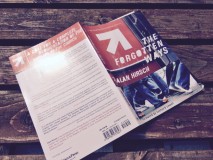
Book Notes: The Forgotten Ways by Alan Hirsch
"Ouch!" - Reading Alan Hirsch's "The Forgotten Ways" was an uncomfortable experience. This is a rich and thought-provoking book which should be widely read by Christians in 'the West', because it so provocatively, and profoundly analyses the church of which we are a part. It hardly needs to be reiterated that we live in one of the few times and places in which the church of Christ is shrinking, (collapsing), and looks completely unable to handle the challenges it faces. Hirsch's book is about why that is the case, and where we should start to look for answers to this crisis.
Central to Hirsch's critique are a series of comparisons he draws between the first Christian churches of the New Testament (and immediate post-NT era) and the contemporary Chinese underground churches on one hand; and the Western church on the other. The comparisons - in which we do not come out favourably (!) are not simply growth-related either, as The Forgotten Ways is not merely about the quantity of disciples of Jesus but about the quality of our discipleship! In Hirsch's view, while we have become used to the settled, 'safe' and 'institutionalised' church; the Early and Chinese churches were apostolic people-movements. As such, they are hard-wired to grow and flourish, while were are almost structured to stagnate.
The canvas onto which Hirsch paints the many fine details of his argument is of the historical shift out of modernism, which has rendered our Constantinian ecclesiological heritage not just irrelevant but positively harmful. Specifically he argues that it was Constantine's endorsement of the Christian faith which lead the way to the stultifying institutionalism which subsequently crippled us. While Christianity held the cultural hegemony, or even just centrality, the churches were able to attract or compel worshippers to participate. This Constantinian shift meant that an elevated priesthood emerged, along with formalised training, structures, offices, roles, and of course special buildings. Christianity was no longer a people-movement, but an organisation dispensing spiritual goods, he argues. This prevailing mindset has meant that in the post-Christendom era, the church has primarily responded to the challenges of secularism, materialism, pluralism and the 'de-christianising' of society by seeking to re-vamp its' existing model in order to compete more effectively in the cultural market-place. Some of Hirsch's most robust critiques are reserved for the 'church-growth-movement', whose programmes, consultants and seeker-friendly presentations he sees as well-intentioned but ultimately disastrous responses to the situation. He pointedly describes the so-called mega-churches as making church feel like a shopping mall; not presenting a Christian alternative to it. Critical to all this is Hirsch's contention (which he argues at length) that if the church is stuck in a Constantian-Christendom mindset it will be fatally wedded to an 'attractional' view of outreach. The evidence presented in this book suggests that this is a largely unproductive approach, as for all but a very tiny group of people on the periphery of the Christian community, they will never be attracted to the institutional church no matter how good its programmes are.
In one stunning passage Hirsch goes as far as saying that the excellence of what is presented in so many church services is actually a problem for the growth of real disciples and reaching new folks for Christ! His reasoning is as follows: Firstly highly professionalised services create a culture of dependency on the institution for the provision of religious goods and services, provided in ever larger venues. This is the opposite of the outward-flow of the New Testament house-churches in which everyone was a participant as there were no religious-professionals running the show.
Secondly, while 'seeker-friendly' approaches make the services of an impossible standard to replicate (I know of one church who require Grade 8 minimum in music before gaining an audition to the worship-band); they also have made becoming a Christian far too easy! The early (and Chinese) churches require any new convert to be willing to give their lives for Christ as they are forged in persecution, and set the bar extremely high in discipleship terms - but have no fancy buildings, robes, musicians, inspirational speakers, or programmes. Instead they had Spirit-filled house churches, and one-to-one encounters which were easily and simply replicated. So while the church as it should be is High-Discipleship and Easy-Replication; we have in our intoxication with dragging the attractional model out for another generation, reversed this and gone for Low-demand-Discipleship, and hard to replicate churches.
What was perhaps hardest for me to read was Hirsch's critique that as a church we have embraced a middle-class fascination with safety and stability in contrast the radical risk-taking adventures of the new testament churches. We don't just work the failing attractional model to death because we have dated theology, but because we feel safe in church where our ideas won't be challenged or ridiculed. I have to plead guilty on this score. Discussing and debating theology with other Christians is endlessly enjoyable and 'safe' whereas engaging the world is more difficult. Hirsch shows that historically it has been when the church has emerged from its inward-focused institutional-maintenance mindset that it has re-captured its divinely appointed purpose of making disciples of Jesus.
Helpfully, Hirsch describes two ways in which this liberation of the church takes place. The first is the re-discovery of this Apostolic-genius through charismatic leadership. Hirsch is always careful to define the kinds of terms he uses in his books, and in this point he is talking not simply about leaders with human warmth or charm, nor about leaders identified with the "Charismatic Movement". Rather he is contrasting the type of Holy-Spirit inspired leaders of the New Testament (like Paul) and the contemporary Chinese apostolic leaders who spontaneously inspire a missionary movement around them; with the kind of 'appointed and employed office-bearer' with which we are familiar in the West.
The second liberating factor is crisis. In Hirsch's experience, research and considered opinion, the church when facing all kinds of crises actually dispenses with all unnecessary embellishments and becomes an apostolic people-movement! These crises have occurred when persecutions have broken out, or when the church has voluntarily extracted itself from its' slumber and lived sacrificially for those outside the kingdom, including the poorest and most vulnerable. In Hirsch's vision for church life, this is about rejecting Christian cultural ghetto-isation, and embracing incarnational missionary living. The book records an amusing (but yet profound) conversation between someone who had been involved in the Western-led Chinese church prior to Mao's persecutions, and the expulsions of 1950; and someone recently returned from visiting the Chinese churches and observing their wildfire growth. The first person expressed sorrow that the Chinese had been robbed of their denominations, theologians and books, western missionaries, and leaders - and were left to survive with just the Holy Spirit. The second replied, "I'm pleased to report that the Holy Spirit is doing just fine!"
There is much more that could be extracted from the book developing these lines of thought, but these snippets give enough of a flavour of Hirsch's perspective for the purposes of a short review. There are many books which claim to be a 'wake up call to the church', and many of these strike a belligerent or aggressive tone. This book however is a real 'wake-up call' - not to work harder or shout louder; but to re-imagine the church without the institutional baggage that anchors it in the past and weighs it down in the present. Instead, Hirsch calls us to re-embrace what he calls the Apostolic Genius of the grass-roots people movement, of Monotheistic Jesus followers, who love and serve this world as they fully participate in it, His critique of where we are in the Western Churches, is astute - and devastating. His suggestions about where we need to go are massively thought-provoking. The difficulty lies in one of Hirsch's closing sentences, (p244) where he rightly says, "For many of us this will feel like an almost impossible leap to get from where we now stand to even approximate the vitality of the Jesus movements we have studied." That perhaps is the only under-statement in the whole volume.
Thursday, July 09, 2015
Munro Bragging
So, with my Munro chart looking quite healthy (219 climbed), I think for the first time I might actually do them all. Anyone want to join me?
Friday, July 03, 2015
Book Notes: My Soul Looks Back In Wonder (Voices of the Civil Rights Experience) by Juan Williams
Williams first came to my attention as the compiler of the Eyes on The Prize reader, a remarkable compilation of speeches and documents from the Civil Rights Movement. This volume has much in common with that previous compendium, in that it is a collection of evidence from that pivotal phase in American History. My Soul Looks Back in Wonder, contains thirty-three vignettes written in the first person by people whose lives were swept up in the Civil Rights struggle. Many are well-known names and faces, or relate to well-known stories from the period. These include James Lawson, B.B. King, and Carolyn Goodman, the mother of Andrew Goodman one of the three Civil Rights workers murdered in Mississippi in 1964.
These testimonies are all about how people woke up to the need to struggle for justice, understood injustice for the first time, or overcame their fear and joined the movement. They highlight important experiences of different aspect of what being in the movement was like, and come from Blacks, Whites, Hispanics, Jews, Asians, Rich, Poor, Northerners and Southerners alike, it covers activists, fundraisers, politicians, parents, marchers, freedom riders, . No two of the stories contained in the book are alike, but all cast a fascinating light into the broader picture of this much-discussed area.
The book is deliberately written at a non-academic level so that it is accessible to all. It would make an excellent school resource, as while the issues raised are important, the language is not complex. Indeed there are discussion questions at the back of the book as if this was the intent. Most of the testimonies recorded contain very little analysis of the movement (there is some), but dwell extensively on individual experiences with the wider history. These stories are moving, powerful and provide a wealth of great illustrations of how individuals away from the spotlight were affected by the Civil Rights protests.
The weaker part of the book is the introduction which over-simplifies matters to the extent that several quite complex matters are mishandled in the quest for obvious clarity. The most obvious example of this is when Williams handles the legacy of the movement - something which also governs his selection of some of the later testimonies too. In Williams' eyes there is a clear and uninterrupted line of continuity between the demand for equal rights, justice, equality and dignity for African-Americans and countless other cultural battles which have subsequently raged; to the point that he views them almost as the same struggle. Among these include the complexities of class conflict, environmental concerns, freedom from Soviet-bloc communism, gay rights and access to abortion. That many people who began their social involvement in SNCC voter registration drives (for example), and spent subsequent decades campaigning on these other issues is not in doubt. What I found unconvincing was the subsumation of all these issues into one whole when the clear-cut morality of ending American apartheid gave way to far more complex and nuanced issues over which not all Civil Rights activists would have agreed. Abortion is the obvious example. For Williams, this unbroken continuity runs from rights for Black Americans, to rights for American Women, to access to abortion. What he doesn't address is that for other people switched onto civil rights, their concern for 'full personhood' so long denied to African-Americans was transferred to American foetuses whose full personhood they wished to affirm and defend. Many of them took their inspiration from the Civil Rights movement, both in terms of philosophy and method, using non-violent protests, sit-ins and the like. So, the continuities he proposes as axiomatic, are in fact controversial at the very least.
However, this minor criticism affects only a small part of the book. The vast majority of its 220 pages is taken up with the straightforward telling of the battle against segregation. in schools, public spaces, on voter-lists, in the justice system, politics and in public transport. As such, this book is a very helpful, and personal, introduction to Civil Rights reading.
Wednesday, July 01, 2015
Midlake - It's Going Down
I love the tender melancholy of Midlake, Antiphon is a wonderful album - it drifts into Camel and BJH territory rather beautifully.
Subscribe to:
Posts (Atom)