Thursday, September 27, 2012

To the East and the West


Kinnoull Hill - East and West views at Sunset


Saturday, September 22, 2012

Just some fungi


Barnhill, Perth

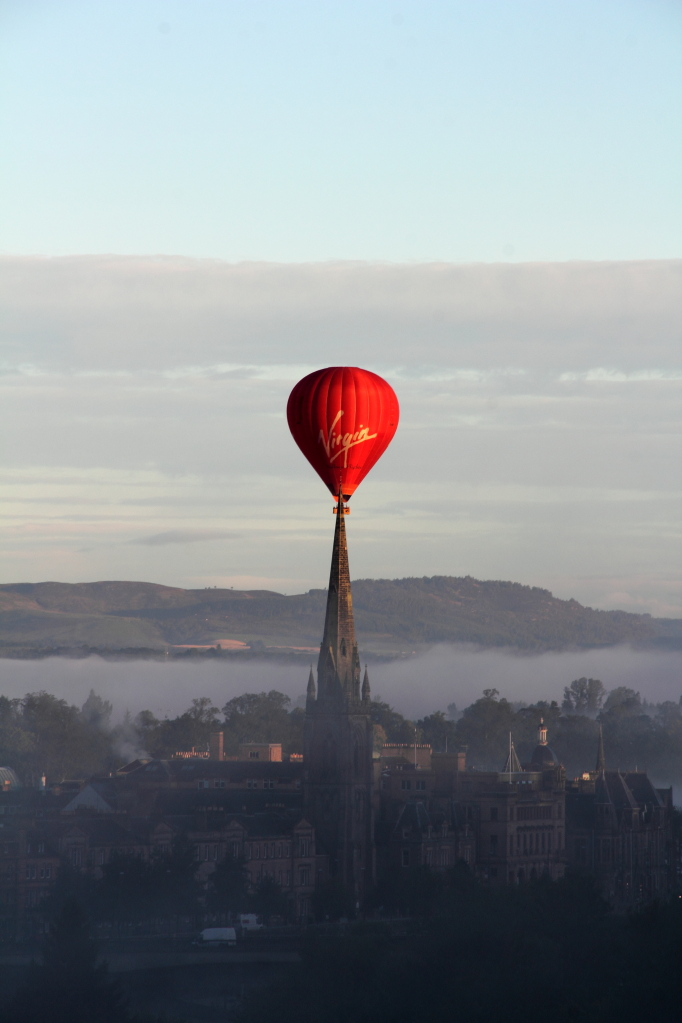
Up, up and away...


(in my beautiful balloon...)

Kinnoull Red Squirrel

Look closely, there's definitely a red on that trunk......

Morning inversion

"I don't know why-yy, you were inverted..."

Friday, September 21, 2012

In the woods

Autumn colours, Barnhill, Perth

Tuesday, September 11, 2012

9/11 Memorial

Part of a window frame from the Twin Towers, displayed in the Imperial War Museum, London

Monday, September 10, 2012

Tuesday, September 04, 2012

"In the beginning, God" a talk by John Lennox

Starts slowly - but gets going, worth following his argument...

Saturday, September 01, 2012

Book Notes: Cairngorm John by John Allen

Being in the mountains; walking them, climbing them, skiing them, painting or photographing them seems to drive people to write about them. Any book or gift shop in the Highlands of Scotland has a shelf or two devoted soley to the genre. Not that I am in a position to complain about this, of course - a click on the words "hills" on the "labels" menu on the right hand side of this page will reveal that I am subject to the same forces I describe and have spewed forth words on the subject at regular intervals since this blog begun. A high proportion of such books are written by 'extremists' who have accomplished extraordinary moutaineering feats - and presumably need to recover the costs of their months in the mountains, and so take to publishing. John Allen's "Cairngorm John" is a quite different sort of book - because from 1972 - 2007, he was a member (and for most of that time, the leader) of the Cairngorm Mountain Rescue Team. The book is subtitled, "A Life in Mountain Rescue" - which nicely summarises what makes this book both unusual and fascinating.

Two images spring to mind when a book about mountain rescue is considered; the first is of macho-posturing and adjective-busting narratives of daredevil rescue ("Thunderbirds are go!") and the second is of tutting and moaning about idiots who get into trouble in the hills, and the bother they cause. John Allen's book is neither of these, but is in fact a thoughtful and realistic memoir packed full of discussion about the practicalities and challenges of safely removing the stranded from all manner of situations - in varying medical states. While one or two of the rescued are criticised (the ill-equipped teacher who led more than thirty ill-equipped kids up onto the plateau); Allen is usually remarkably respectful of the people he has rescued - and notes that the well-equipped, and highly experienced are just as likely to be overwhelmed by the brutality of the mountain environment; as the naive tourist.

While there are some tales of heroic feats, stretchering splintered-limbered climbers off precipices in blizzards; much of the book focuses on the organisational logistics of organising and planning a rescue. Likewise, there are poignant chapters on rescue-attempts which did not have happy outcomes, where rescue dogs locate frozen bodies in the snow, and the team notify the base and return the remains to the families. This is hard reading, especially when the victim was a youngster.

The relationships between the various bodies who work together on rescues (Mountain Rescue, Air Force, Ambulance/paramedics and police) also make insightful reading. This is so, not just on the various funding negotiations which Allen was party to, but also on the use and limits of helicopters (RAF), the extent to which a mountain rescue crew should attempt medical procedures in situ at the expense of speed of extraction of the victim from the mountain environment (ambulance); and the potential that a death in the field might be a crime scene and how this affects the process (police).

Some of Allen's personal life also permeates the narrative, from his childhood, training as a pharmacist, marriage, family life, and of course moving up to the Cairngorm area when he was able to run his own pharmacy business. His own love of the mountains, and mountain sports is obvious - and he was no stranger to the difficulties that even mountain experts can get into; and talks about the serious knee injury he sustained on a climb which finally led to to his retiral from the service and a change in retirement from hills to water, from climbing boots to sailing boats.

One personal footnote I wish he had developed a little more was his loss of the Christian faith he was brought up with. He mentions gaining skills and experience running a Scripture Union holiday camp at Scoughall (a place I first visited just this summer), but going on to leave the faith. Apart from wanting to play sport on Sundays which violated the Scottish-Sabbatarian version of Christianity on offer at the time, he offers no other explanation for this departure. The sadness I feel as a Christian reading that is coupled with a bit of frustration as a reader who wants to know why!

Nevertheless, hints of Allen's upbringing filter through sometimes. He describes the evolving development of the service as they constantly sought to improve techniques, equipment and training - making enormous progress over the decades. One of Allen's major achievements was the  purchase and equipping of a new base for the service in an old church building near Rothiemurchus, a change of use he notes that still involves "fishing for men". Alongside the development of the service, I also enjoyed reading of Allen's various colleagues - quite a cast of colourful characters - over the years, and the great affection and comradeship that existed between the members of the service. He describes many of them with enormous respect and admiration - and fondness, especially for those no longer living, who gave great time and energy to this good work. The Mountain Rescue Service, although professional in its standards, remains to this day the work of volunteers - one of the reasons that Allen gained an MBE for his work.

Personally, this book has made me a little more cautious in the hills. I have always been a fairly cautious walker, but that is probably because I have done so much walking in the Scottish Mountains on my own. The added caution is not in what kind of routes I tackle, as they seem to be getting longer and more demanding!  However, I have found myself carrying more than I used to, in terms of spare layers, extra food and carrying things like a warm hat - even when the forecast suggests that it will never leave the comfort of my pack. In so many stories in this book, accidents have occurred when the unexpected happened, and the fate of the casualty was significantly affected by how well equipped they were to deal with it. Likewise - while I used to be happy to charge my mobile phone and let it run-down during the day; I now realise that so doing would leave me with a dead, useless phone were I to break an ankle and be out all night. My phone these days gets charged up and switched off!

For anyone who loves the Scottish Mountains, this is an informative and engaging book that will both educate and lead to greater appreciation for the great work that the volunteers of the Mountain Rescue Service do, and would be willing to do for any of us who got into trouble in the hills.

Friday, August 31, 2012

Beinn Dearg (Atholl)


Beinn Dearg (Atholl) is a large lump of a hill which is the SouthWestern corner of the four Munro's collectively known as "The Ring of Tarf". It gets it's name (which means Red Hill), from the pinkish tint in the granite from which its' hard upper reaches are made. Beinn Dearg is not an especially dramatic mountain in shape and throws up no awkward obstacles or demanding climbs to test the walker who wishes to make its bald summit. Climbing this hill still presents something of a challenge though - simply by virtue of its distance from any public road.

We left the car at Calvine, where the landrover track which leads up to the Minigaig Pass begins, and which is used by the Atholl Estates as an access road to their busy hunting lodge in Glen Bruar, known as Bruar Lodge. Other routes in, such as that from Old Blair are reputedly prettier, but needing to cover the eight or nine miles to the foot of the hill within the time-limits imposed by family commitments, we opted to cycle the Bruar Lodge track all the way to the hill.

The track gets off to a brutally steep climb, ascending rapidly on the stony track as it winds its way Northwards, away from the noise of the A9. The constant ascent is broken by one major descent as the track crosses the minor hills of Colrig (446m) and Creag Bhagailteach (492m) before dropping a hundred metres of so to the side of Bruar Water. While this descent is a blessed relief to burning muscles and knees on the way in - it was a cautionary note that the way home would not all be freewheeling later in the day!

Bruar Lodge is an impressive sight, a large, active hunting lodge, nestling high in a remote glen, it is the centre of a little community of houses which gather round it. As we cycled up to the lodge, it became apparent that there was a shoot on. Unfortunately, because our delayed start to the day we had missed the party leaving for the the hills. By the time we had thought to use the HILLPHONES service, we were out of telephone range, and so called at one of the houses to ask about a route which wouldn't interfere with the hunters. I have heard many tales of friction between walkers and estate ghillies - but personally I have never had any problems, wandering up, having a chat and asking where I can walk without getting in their way. The advice from the folks around the lodge was to head on past the normal ascent routes which lie to the south of the summit, and take the pony track up between Beinn Dearg and Beinn Losgarnaich to ascend the final section of Beinn Dearg from the west. This was a significant diversion - but one we were happy to make in order to both allow the shooting party to enjoy their day out, and minimise the chances of spending the night in hospital having lead shot removed from our bodies!

This turned out to be a very straightforward line of approach to the hill. Leaving the main landrover track at a bridge just under a kilometre north of the lodge, a good track soon emerged on the north bank of the burn. This we followed until it petered out just after the 700m contour. The 1:25,000 scale OS map shows this path continuing, but it wasn't obvious where it went. With the top in sight from here we turned westwards across the bogs and peat hags (easily navigable despite the recent heavy rain), and clambered up the boulderfield to the broad summit which is crowned by a large circular cairn built around an old trig-point.

The Tarf and Tilt hills, as they are known, are a wide area of heathclad moors, and rolling uplands - named after the two major rivers which export their rainfall southwards into the River Tay.


The Tarf is hardly breathtakingly spectacular in the way that The Cuillin in Skye arrest the attention. Yet these vast expanses of uninhabited Perthshire have a majesty and beauty of their own - which simply cannot be appreciated through a car windscreen at 70mph on the A9. These are hills which need to be walked, and which need to be climbed; they have vast horizons which need to be gazed at for long periods of time, from the highest of their view-points. As the photos show, the light was poor; clouds billowing through with occasional drizzle - with alternative columns of shade and sunshine chasing each other in successive waves over the undulating heather below. Sitting up there (even in August!) was a chilling experience - and feeling the cold pinching us we decided to make a move - retracing our steps to the bikes we had left at the foot of the Alt Beinn Losgarnaich.

The outward cycle is mostly downhill, and the miles just race by. The one climb, past Colrig, was hard, and at the end of a long day, extremely challenging. The reward of this effort though is a spectacular downhill run, at break-neck speed all the way back to the car. The mapping software tells me that we covered 22miles, 17 of which were on the bikes, enough distance and effort to make this hill feel like a achievement, not just a nice day out.


Festival!


Some sights from around the Royal Mile, during the melee that is The Edinburgh Festival season.

Thursday, August 30, 2012

Oban

Sailing into Oban on the CalMac Ferry.

Cal-Mac's Shiny Ferry


Giving the ferry a nice new red funnel requires a paintbrush on a long stick, apparently!

Waiting for my ship to come in

Quite literally in fact....

The Sight of the Sound of Mull


Bala/Tobermory

"Look at all the coloured houses......." To those of us who had our children around the millennium, we will always expect to meet Miss Hoolie or Archie the Inventor when we visit Tobermory, whereas our parents probably think of an ingenious Womble...

The Cal Mac Ferry

No holiday in the Western Highlands would be complete without the iconic (& obligatory) photo of a CalMac Ferry! This one is the Oban-Craignure (Isle of Mull) ferry.

Camping at Craignure, Mull


Craignure Cut 'n' Paste

Nice view from the campsite at Craignure - Isle of Mull

Wednesday, August 29, 2012

Ben More (Mull)

Ben More on Mull (not to be confused with its namesake near Crianlarich), is the only island Munro not found on Skye. It's a shapely mountain with expansive views, whose 966m summit lies at the centre of a collection of ridges which sweep up from the sea.

It's a fine looking hill, visible for miles around and one which I have seen many times - but only recently managed to climb. My wife and I managed to get a few days away without the kids this summer (thanks to the grandparental support services - London branch). After exploring Ardnamurchan we went to Mull, a place we had visited on our honeymoon back in 1996. Just as in 1996, Mull looked fantastic, the sun shining on  great mountains, sea-eagles hunting over the lowlands, and seals in the lochs. And just as in 1996, I fancied a day in the hills and my wife had her eye on a series of pottery shops!!

This time - the hills were the winners! And after a brief mishap with the car (it turned out to be nothing more than a stone trapped very noisily in the brakes), we went in search of Ben More.

The access road to the central westward thrusting peninsula of Mull (B8035) leaves the main road at the village of Salen. After Gruline it skirts the delightful Loch na Keal - a quiet, single-track road through gorgeous scenery. The usual access route for the hill is at Dhiseag, where a track heads southwards past a high-set house. Recent flooding has washed away some bridges on this road, which are currently being repaired in a series of major roadworks. We were forced to abandon our car about two miles before Dhiseag and walk along the road to the access track. 


The climb from Dhiseag is a long drag, hard work and quite boggy in places - even though we were walking after a spell of prolonged dry weather in West. Paths of various quality come and go as thousands of walkers have worked their way up these slopes. The path on my OS map peters out after a mile or so, but later editions of the map indicate that it continues high onto the mountain's ridges.

The climb from Dhiseag contains no technical difficulties (all these are on the other side of the hill - where adventurous hill-walkers can seek their thrills); but the middle section of the climb is relentlessly steep and hard work. The 'path' bifurcates numerous times amongst scree and boulders, but re-unites on the ridge leading to a huge cairn.

From the summit, the eyes are immediately drawn to Ben More's other top, A Chioch (top photo), over which is an alternative ascent route, then over the curving southern ridge (middle photo), and westwards down Loch na Keal over the cluster of small islands to the Isle of Ulva, just of Mull's coast.

The car-problem earlier in the day meant that we were quite short of time and needed to head straight back down the route we had come up, and in beautiful evening sunlight we trudged down the hill to Dhiseag. Our initial thought had been that the road closure was a pain, an inconvenience, and an annoyance. How wrong that turned out to be. Rather than cursing the enforced road-walk, we found ourselves walking in warm evening sunlight, in the silence of a closed road, with view to our left of the beautiful loch, and to the right - constantly changing glimpses of the ridges and peaks of Ben More which had been our conquest of the day.

Aching feet were removed from boots (my wife's had some nasty blisters), and aching limbs were put in the car - and we drove back; feeling sore, weary and content; towards hot showers and then some food at the splendid Craignure Inn. The best day of the summer, maybe?

Monday, August 27, 2012

Gig: The Martin Harley Band, at The Half Moon in Putney


There is no doubt that my musical discovery of the summer has been "The Martin Harley Band" - a three- piece in which bass, drums and harmonies encircle Harley's guitars, vocals and songwriting. The band are effortlessly versatile, moving seamlessly from humourous 'old-time' music like, "Love in the Afternoon" (above) to the gourgeous acoustic balladlry of "Winter Coat", before diving headlong deep into the Delta Blues. In their blues numbers Harley often swaps his standard acoustic guitar for a lap-steel, on which he slides with immense gutsy, emotional power. Pete Swatton is a wonderful drummer who also contributes some backing vocals, as does bass player Jay Carter.

I came across this great band almost by accident! I was in London for a few days in the summer, in the week prior to the Olympics - and so googled about a few places to see if there were any gigs on. The Half-Moon in Putney, West London is easily reachable from my parents house, so my Dad and I went out for the night, so see if the band on were any good. It turned out to be a really fantastic evening. The band were on top-form, and clearly able to deliver very high-quality live performances of songs - injected with that harder, more exciting edge that comes from the immediacy of facing an audience. This was absolutley first-rate live music, delivery by three highly talented individuals who must play together a huge amount to gain the tightness and togetherness they achive as a trio. I can't wait to hear them live again.

Their most recent album "Drumrolls for Somersaults" is a wonderful collection of songs, in turns jaunty, funny, bluesy, sombre, delicate, poignant and fun - it is a finely produced and rather wonderful album. It seems to be the least blues-orientated of Harley's works, and blues lovers might wish to start with the "Money Don't Matter" album which contains the stunning "Blues At My Window" track which sounds like John Martyn singing and Peter Green playing guitar - and that is very high praise indeed.

Here's a short (non-musical) promo for Drumrolls for Somersaults!


Here's a few more links to Martin Harley band stuff:

Three videos from Drumrolls for Somersaults here
Blues At My Window (audio) here
Money Don't Matter (live video) here
Official Website (including tour dates) here