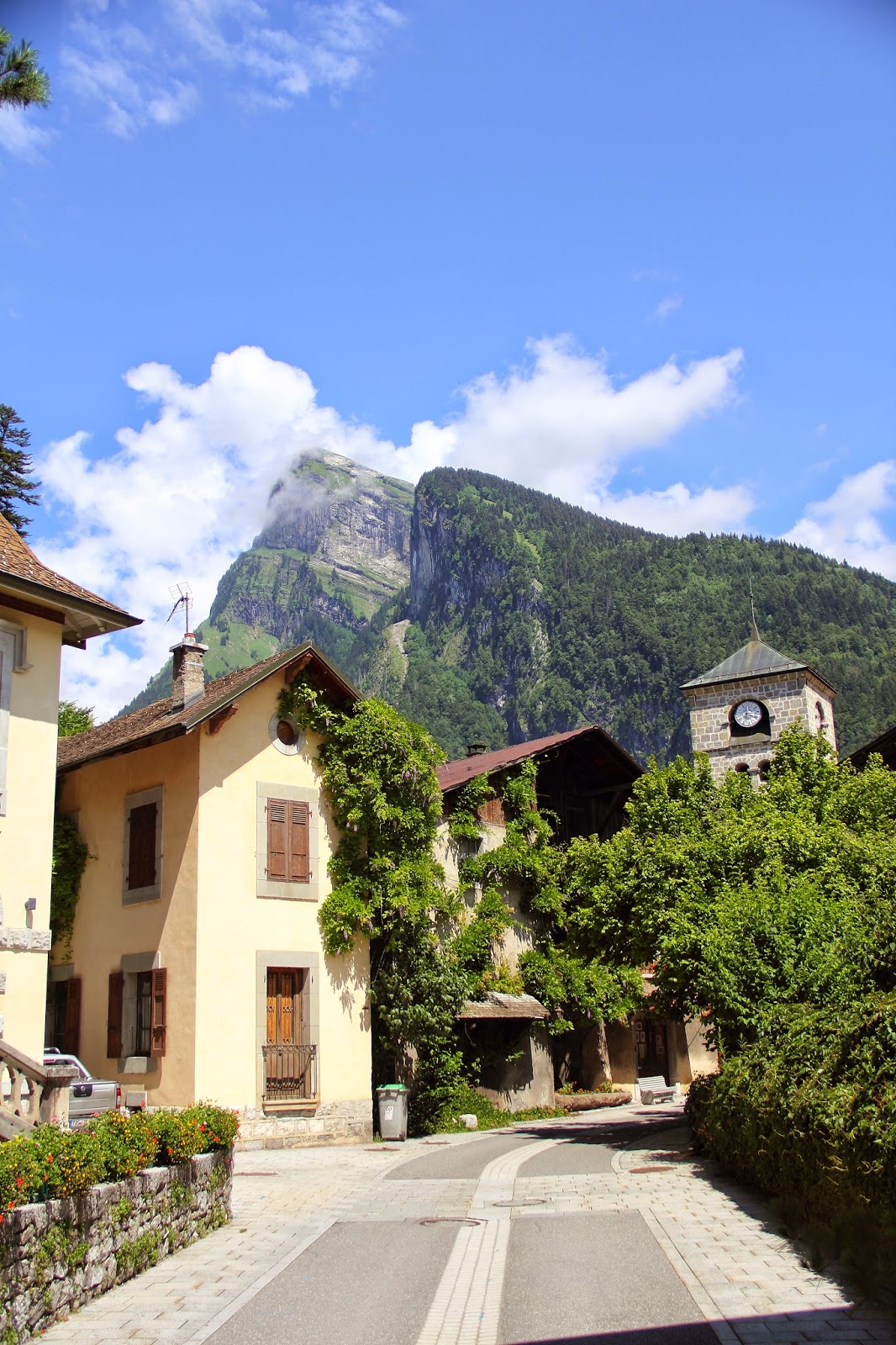
Wednesday, August 20, 2014

Samoens


Book Notes: Imagine Church by Neil Hudson

Neil Hudson's book "Imagine Church" is the book which accompanies the London Institute for Contemporary Christianity's (LICC) various resources under that title. The LICC continues to work with the 'double-listening' approach to church life and theology as explicated by John Stott who was very involved in its' early years. His notion was that as Christians we need to be people who listen both to the Bible and to surrounding culture in order to be faithful to the former in the context of the latter. Imagine Church fits very nicely within that framework and is an obvious extension of its trajectory.

The premise of this book (one which I share), is that the church has too often imported the categories of the "sacred" and the "secular" into our thinking and practice. No doubt all church-attenders will have heard the vocabulary which flows from that profoundly unbiblical world-view. In the language of this distortion, we 'gather' for worship, but 'scatter' into the world; while vicars and ministers have a 'calling' which plumbers and shop-workers do not share. The ministry of the church takes place when we separate from the world, 'gather' together in meetings and hold church groups - but little attention is given to equipping believers to live as "whole life disciples" following God's calling in the home, the market-place and in leisure. 

Martin Luther wrote the doctrine of the 'priesthood of all believers' and so Protestant churches abolished the priesthood. What we should have done of course, is to have abolished the laity (!), and embrace the concepts in this book about the whole of life being complete under the Lordship of Christ.

This book is a stirring wake-up call to the church to reverse the centuries of misplaced emphasis and actively seek to empower believers to live lives of worship in the specific contexts in which they live, work and play. It is simply not good enough if the only people we pray for in public are 'professional Christians' at home or abroad if our own people have both opportunities and challenges in the everyday lives which they need to navigate faithfully. Hudson points out that the church has been great at managing the 'inner circle' the leadership and church rotas etc; and adept at nurturing the outer-circle of commissioning workers to go on mission in Christ's name all over the earth. Why then, is so little attention given to the middle circle - connecting the gospel to everyday life? One answer is of course, that the professionalisation of the clergy means that by default they are progressively disconnected from the realities of most peoples lives. The book contains some interesting ways in which churches have sought to reverse these trends.

I was particularly struck by the church order of service which ended with the song, "Come, Now is the Time to Worship", which is usually an opener. The message usually conveyed is that living and worshipping are separate; but concluding the service like that makes the meeting more about equipping the saints to worship which they will continue to do when they 'scatter'.

If there are any faults with this there are two which detract slightly from the force of the whole. The first is that the book would have benefited from a theological and biblical introduction mapping out the main ideas - rather than just pointing to the useful reading list. The second is that the book is woefully repetitive - and could have achieved the same end in a fraction of the length, even with a better introduction. Nevertheless, thought-provoking stuff.

Friday, August 08, 2014

The Forth Crossing at Halfway


Click on images to enlarge....


Book Notes: Young Stalin by Simon Sebag Montifiore

Having recently read Simon Sebag Montifiore's excellent book about Stalin's reign as leader of the Soviet Union, (Stalin: In The Court of The Red Tsar) I was pleased to discover that the same author had followed it up with another volume about the notorious dictator. For the second volume of his work on Stalin, Montifiore has delved into the early life of Joseph Djugashvili, (or Soso, or Koba) the man who would come to the world's attention under his 'stage name' : Stalin, the, "Man of Steel".

Like the first of his books on Stalin, this is an astonishing read. While meticulously researched with access to many newly accessible sources from Stalin's youth; this is no turgid academic accumulation of data; nor an esoteric polemic about minor matters of dispute amongst professional historians. Rather it is a readable and compelling - if at times scarcely believable tale of an extraordinary individual living in, and formed by extraordinary times.


Perhaps unusually, the back-cover of the book is worthy of special mention as it so neatly summarizes the content! Each adjective on the back is accompanied by an archive photograph of Stalin from this period, and it displays him as successively an Urchin, Choirboy, Student Priest, Poet, Lover, Pirate, Gangster, Killer and then as a post-revolutionary Commissar. Stalin the Commissar, as one of Lenin's sidekicks 1917-21, is perhaps the most well-known of these images. His background in the seminary is also referenced often (sometimes rather stupidly by New Atheists who try and lay his atrocities at the door of the church!).

In these pages, the reader is exposed to a wide range of Stalin's stages of development. His wrangles with his alcoholic father, his complex relationship with his mother; his hatred of the church and seminary where she sent him, and his discovery of Marx and his formation into a Georgian revolutionary. Many chapters begin with translations of his youthful dreamy and romantic poetry - which comes as a surprise to anyone who has only read of the "Five Year Plans for Industry" or the "Liquidation of the Kulaks".

The book traces his numerous affairs, his first marriage, his revolutionary and intellectual development and his discovery of Leninism and the internationalisation of his initially Georgian Marxism; until he became Lenin's specialist on 'The Nationalities Question' in the Russian Empire. Some of the most incredible chapters concern his period as Lenin's chief fundraiser, (ie gangster/pirate/bank robber), and his periods spent in Siberian exile.

Yet for all the dashing heroics, the poetry and the romance, Montifiore also traces the trail of blood which accompanied Stalin through every stage of his journey. From very early on, people were disposable assets to Stalin - an outlook which when coupled with an anti-individualistic Marxist creed, made persons of no value except as instruments of class-struggle, and then of the proletarian state; became virulently toxic. Montifiore does not engage in simplistic pop-psychology in seeking to explain Stalin's natural malevolence, he merely charts its development and notes repeatedly that it was always accompanied by great charm, huge charisma, and not a small dose of sentimentality.

This book is as informative, as it is brilliant as it is chilling. History written this well is powerful stuff.

At Chalet Brio


Wednesday, July 30, 2014

Gig Review: Robyn Bennett and Bang Bang Live in Samoens

Some of the choicest musical discoveries are those which come by surprise, which are as unexpected as they are exquisite. Last summer, this happened when my Dad and I stumbled across The Martin Harley Band playing in London's famous music pub, "The Half Moon" in Putney. Not quite knowing what we were in for we went for a night out, and the music has stayed with me - I'm still raving about it.

I'm happy to report that our family had a similar experience this summer. After a morning walking high in the French Alps, up to a great viewpoint we descended to the town of Samoens in search of food in the afternoon. Everything was shut and we wandered around the town with a line of hungry (and tired) children behind us. Food was not easily found, but as we walked through the town square we heard a fabulous band rehearsing.
 The band was Robyn Bennett and Bang Bang, a jazz/swing/blues/funk group who had just set up a stage and were sound checking. "A quelle-heure est la musique?" I franglaid to the sound man who was happy to confirm that the main event was at "Neuf-heure".

We returned to Samoens and at Nine O'Clock the town square was packed with people, who had come to hear the band as part of a local music festival. Unbelievably it was completely free too, and we got great seats up close to the band.

The band deliver some lovely jazz grooves, some funky rhythms and provide a perfect backdrop to Robyn Bennett's voice as they delivered most of the songs from their new album "The Wait", alongside one or two standards and a cover for good measure.


Bennett's voice is expressive, sweet and is especially exells in the upbeat swing numbers like album opener and live singlalong number, "Too Much", while the guitarist, trombone and sax players delivered some enjoyable solo-ing around the songs; over a bass-drum section who knew how to groove.

The band's performance was engaging enough to grab all my kids attention, despite the fact that this is not the kind of music any of them would normally listen to. The fact that this was something we all enjoyed together, helped to make this one of the highlights of our trip.

It was a hot night in Samoens, and we sat in front of the stage as the band played, and the sun-set on the Alpine peaks which tower over the town. It was just one of those fabulous nights.... Buying the CD, and chatting to the band after the show, we discovered that they have never played a gig in Scotland. This is an oversight, I hope they will correct soon!


Cascade du Rouget


Friday, July 04, 2014

Book Notes: Stalin: The Court of the Red Tsar by Simon Sebag Montifiore

Simon Sebag Montefiore's massive book on the workings of Stalin's government is the stuff of nightmares - quite literally for me as I have read it over the last couple of weeks. Those nightmares are testament both to the ghastly grip of terror in which Stalin held the Soviet Union for a quarter of a century, and Montefiore's skills as a researcher and writer. This book is as compelling as it is disturbing.

When I opened the book, I knew a bit about Stalin - his rise to power, the five year plans, collectivisations, liquidation of the 'kulaks', the purges, show-trials and WWII and Stalinism being a byword for tyranny. That however was not enough to prepare me for the full disclosure of the malevolence, violence, sadism, and genocide which to Stalin and his band of 'magnates' were simply political tools for the furtherance of their own fanatical Marxist-Leninist agenda, and personal quests for power.

Montifiore introduces the reader to the band of Bolsheviks who ran the Soviet Empire with Stalin from the mid-1920s. He shows how they lived, worked, partied and played together in a politico-social world centred on the Kremlin, where the leading party members children wandered in and out of each others apartments. One by one, of course, each of these families is destroyed by the paranoia and jealousy of Stalin - and his secret police. The secret police were themselves of course, purged repeatedly each head seeking to impress Stalin with his willingness to take the principles of terrorising the population with mass-killings to further extremes. So Yagoda fell to be replaced by Yezhov, who fell to be replaced by Beria - who was about to be flung out from Stalin's favour when the latter died in 1953.

Strangely alongside this grim tale of evil and carnage, Montifiore paints a picture of Stalin the man. He was someone who loved singing with friends, taking party grandees on picnics, playing with children, who loved dancing and parties and who was deeply affected by the suicide of his wife Nadya - and who raged against the alcoholic foolishness and debauchery of his uncontrollable son. He paints a picture of a man who without emotion personally signed off the deaths of erstwhile friends, colleagues allies and neighbours; or signed death warrants for hundreds of thousands of people he had never met with s stroke of a pen; but who personally censored all references to sex from Soviet film because it offended his sense of Bolshevik-morality! 

In these pages we meet a Stalin who was a gregarious party host, with a riotous sense of humour, but also the owner of a vicious temper and a long, long memory for grudges. Stalin is seen here as paranoid, devious, awesomely powerful, charismatic, and utterly devoid of morality, but also capable of both great personal kindnesses and personal vulnerability. On one page he demands the torture of some Russian he believes plots against him (real or imagined plot), while on another he walks lonely in his garden (all his friends dead at his hand), muttering the words "Oh Nadya" about his late wife, over twenty years after her untimely death.

The other engaging but disturbing part of the book were the chapters on Stalin's intellectual life. Having read a little about Stalin before - I had encountered writing which simply described a foolish thug. Montifiore demolishes such two-dimensional caricatures and presents a Stalin who was the master political plotter and strategist, who read voraciously, who not only read and  understood Marx, but was fanatic in his pursuit of Lenin's interpretation of him. Stalin debated with writers, filmmakers, poets, composers, generals, journalists, heads of industries and contributed to all these fields; persuading (or shooting) people who disagreed with him on the way - forcing his way on others regardless of whether it had merit; or was utter folly, such as his faith that the Molotov-Ribbentrop Pact would hold until 1942 at least.

Alongside all the henchmen and Bolshevik characters (both friends and foes of Stalin), such as Bukharin, Molotov, Mikoyan, Krushchev, Bulganin, Beria and the rest; other great figures who loom large in this book include FDR, Churchill, Tito, Mao, Ribbentrop, Hitler, and Harry S. Truman. Stalin's assessments and interactions with all these men are fascinating and intriguing.

Stalin is seen as either the great distorter of Lenin's more benign legacy; or as a warning about the inevitable consequence of starting down the path of extreme political ideologies; be they theocratic, nationalist, class-based, ideology-driven or race-based like Nazism. Tsarism was a dreadful system, and Nicholas II a dreadful exponent of it; but how might people have acted differently in 1917, if they had seen that it would lead them towards the horror that spread through their country a decade later.

Montifiore's book is staggering, shocking and gripping tale of the workings of arguably the most profoundly wicked, weirdest and most disturbing regime of the 20th Century (it's a straight fight between Stalin and Hitler for that dark accolade). Superb reading, but nightmare inducing.