Last week I did some work for this chap, Andy Bannister. Amongst other things, like writing and debating, he makes these little "Short Answers" videos about various aspects of Christianity. I've been thinking about which one to post up here as a sample. I suppose the best would be these two as they are about Jesus himself, the heart of the faith. They are nicely made, and only a few minutes each. There's loads more of these online here, where I've just noticed you can ask a question too.

That Hideous Man posts his rather dull thoughts here. Watch this space, or indeed, go somewhere else.
Friday, October 26, 2018

Wednesday, October 24, 2018


Film Notes: Son of Saul

Son of Saul, is without any doubt, the most horrific film I have ever seen. It left me numb,and in shock, while my wife felt physically sick. Watching it is something of an endurance test for the viewer - and yet despite this, it has won countless accolades including the Cannes Grand Prix, and the 2015 Academy Award for best foreign language film. What is it that made the film juries, and the countless critics who's scores accumulate to 95% approval on the Rotten Tomatoes meta-critic site, so endorse this appalling spectacle? There are several reasons:
The first is that this is a film about truth. The action takes place over two-days in the heart of the Nazi's death-camp at Auschwitz. Using the best first-hand account of how the industrial scale murder-factories looked, were run, staffed and organised, the details of the story-line might be fictitious; but they are rooted in truth. Life in the camps has been depicted before, in films like Schindler's List, where the viewer thought for a moment that they were going to be asked to watch a mass murder by gas; but are spared at the last second. Likewise, I've seen disturbing depictions of the labour-camps before; but Son of Saul, is set right in the heart of the killing. László Nemes might just spare us the sight of the asphyxiations themselves, but he does not spare us the victims screams - and hopeless banging on the gas-chamber doors.
The central character, Saul Ausländer (Géza Röhrig), is a Hungarian Jew. imprisoned in the death-camp. Primo Levi, in "The Drowned and The Saved", his Auschwitz memoir, describes the various roles prisoners were given. The useful like him, were put to hard labour, others were selected for medical experiments, while others were condemned to what he called "The Gray Zone", that is joining the Sonderkommando. These most wretched of souls gained a few months of life, by running the death-machine. Saul, was a Sondercommando, and we first meet him herding fellow Hungarian Jews to their death, taking their possessions for the Nazi's, hauling out the naked bodies from the gas-chambers, and scrubbing them clean for the next train-load. This is so intense, so incomprehensible, that it is hard to watch. However, the fact that this happened, as recently as in my parents' lifetime, means that it has to be faced.

The second reason that the film has been so lauded is the extraordinary cinematography. In interviews, László Nemes has described shooting the film in a messy way, all from human-eye-level. The fact that the narrow depth of field means that the main characters faces are in focus, but the background is constantly out, is also remarkable. It creates initially a sense that Saul has his head-down, trying to avoid seeing, what is all around him; the eye-level filming drawing the viewer right into the hell. The strangely muffled sound-track adds to this curious sense of the recoiling-self seeking to protect itself through a form of cognitive dissonance. This technique also allows the filmmaker to allow the horror of the gas chambers to appear on screen - while seeking to avoid the gratuitous, or prurient details the focus of the shot. Saul, has to help remove the naked corpses of the newly-slain from the gas-chambers. Yet, while the bodies are dragged, with no ceremony or dignity whatsoever; László Nemes places them just beyond the focal length of his cameras. The result is visually striking, absorbing and deeply, deeply disturbing.
The third, and most important reason that Son of Saul resonates so powerfully with audiences and critics, is that it is ultimately a film about humanity. The underlying narrative is that the Nazis denied that the Jews were human; and treated them in accordance with this twisted view - and as a result lived in complete denial of their own humanity. I was sickened by the way the Nazis called the dead "pieces", unable to face up to, or even comprehend what they had just done. I believe it was Auschwitz survivor Rabbi Hugo Gryn (1930-1996), who says that he never once asked "Where God was in Auschwitz"; but was constantly asking, "Where is humanity?". Despite the loss of his liberty, dignity, morality, hope and the abject denial of his humanity, Saul, of the Sonderkommando, holds onto one tiny shred of his personhood. Without spoiling the plot, Saul is determined to find a Rabbi, amongst the prisoners, and give a proper burial to one small dead Hungarian-Jewish boy from the holocaust. This one body, like that of the 'unknown soldier' of WWI, comes to mean much more than just itself; but a representative of wounded humanity. Saul's bewildering desire to commend his 'son' to the earth and to God, is a powerful portrait of a man clinging to some shred of humanity, while living in a hell-on-earth. The one thing with which he will not be parted, is his desire to give one little human the right departure, and to commend him to God with some dignity.

That beautiful, yet minute thread of light, is the only hope found in this horrendous depiction of evil. I'm sure that watching it was the right thing to do. I don't think I could watch it again though.
Tuesday, October 23, 2018
Through The Chalamain Gap to Lurcher's Crag

Creag an Leth-choin, or Lurcher's Crag, is a wonderful top, high in the Cairngorm plateau. Apparently, it was once considered to be a Munro in it's own right; but now is simply listed as a 'top'. I have previously blogged 'in defence of Munro-bagging', but the down-side of it is equally obvious; walks like Lurcher's Crag are missed-out, when they are so worth doing.
We began our walk at the 'Sugarbowl' Car Park on the road from Rothiemurchus up to the Ski Centre. Our oldest has left for university, so it was just the three of us, who crossed the road and followed the well-engineered path down into the gorge of the Allt Mor, and across the wooden footbridge. Here we caught up with a group of fifty or so folks walking up, with guides, to visit the reindeer enclosure in Glenmore. The guides were carrying sacks of feed, and were happy to chat about the 60+ years of reindeer in these hills, since re-introduction; how the tourists pay far too much for guided trips to see them, and how they control their numbers through surgery (!), not culling.

The Chalamain Gap
Our conversation was brought to an abrupt end, as they took the right fork in the path to the enclosure, while we veered left; across open country, towards the famous Chalamain Gap. Without the large group in our way, we were able to pick up speed and follow the excellent path, uphill all the way into it. The Chalamain gap was carved by post-glacial overflow at the end of the last ice age; in a very short space of geological time; when vast quantities of meltwater, trapped behind the retreating ice-sheet found a run-off from the Lairig Ghru to Glem More. What is left is a steep, boulder-lined defile, cutting into the side of the mountain - through which access to the Lairig Ghru can be gained.
I've been through the gap once before, many years ago, on my way through to mighty Braeriach. Scrambling through the boulders in first-light, the moon was framed in the gap.... a sight I'll never forget. This time is was bright, sunny and very cold, as we ascended through the increasingly rocky terrain. My younger son and I enjoyed the rough ground; my wife and daughter did not! However, the excitement is short-lived and a good path resumes, from the exit from the gap, all the way down into the LairigGhru - through which I walked just a few weeks ago.

Across the Lairig Ghru
The path up Lurcher's Crag is very easy to miss, from the main track. A tiny cairn, above a bog to the left of the path marks it's start; but it soon becomes an obvious route - only petering out on the rocky ground on the summit. The view though, get better as the ascent continues, not just of the Cairngorms, but of everywhere to the North of them initially; and then from the summit, right down the great Lairig Ghru itself; between Ben Macdui to the left and Braerich to the right, with the Devil's Point just visible at the back.

Down the Lairig Ghru
Were it not for my daughter's complaining, we would have continued along the tops, around to Cairngorm; however she was at her tolerance point for hillwalking (mental I should add - physically she could walk for ever, if motivated!) and so we planned a route down. Rather than retrace our steps, we traversed to the Lairig Ghru viewpoint at 1010m, and the around to the Miadan Creag an Leth-Choin ridge, from which there is a path back to the ski-centre. By this stage is it was bitterly cold, and large hot chocolate drinks at the ski lodge were in order, before the trek back down the road to the car.
Meall a' Bhuachaille

Meall a' Bhuachaille is a delightful Corbett, set amongst the high Munros of The Cairngorm, offering a lovely easy, family walk - with one of the best viewpoints in the National Park. As if that wasn't enough, it has the added advantage of being accessed via the delightful footpath Ryvoan Pass with it's charming green 'fairy-lochan'.
The track continues past the lochan, climbs slightly and breaks free of the woods, revealing expansive views south and east across the Nethy River and on to Glen Avon. We took the left hand fork, towards the Ryvoan Bothy, but whenever I pass this spot I cannot help but remember a trip down the right fork to climb Bynack Mor, with the late, great, Kevin McPhee.
Behind the bothy, a well-engineered footpath takes to the hill - twisting and turning its way around various obstacles until a massive cairn is reached. The Great Cairngorm peaks of Cairngorm itself, along with it's giant neighbours from Braeriach to Beinn Mheadhoin fill the sky to the south, while beautiful Loch Morlich glistens in Rothiemurchus to the North-west.

It's possible to return by the ascent route, but a circuit can be made by dropping Westwards to the bealach between Meall a' Bhuachaille and the adjacent Creagan Gorm, from where a path descends back to the roadside through the gentle woodlands. A felled section of woodland, on the way down, created a large glade - which was being patrolled by a huge bird of prey (probably an eagle) which we stood and watched as it's broad wing cast a wide shadow, moving through the land.

What a marvellous place!

Friday, October 05, 2018
Film Notes: Rome, Open City

Sometimes when films are billed as "classics", or "unmissable" they fail to live up to the hype. My Mum is likewise always suspicious when the reviews of a book use the word "achievement"in the publisher's blurb. Roberto Rossellini's "Rome, Open City", is somewhat weighed down with heady reviews, which both elevate expectations and make objective appreciation of the film difficult.
The film, made in 1945, concerns the Nazi occupation of the city during the latter stages of The Second World War - after the decline of the Italian Fascist State; and during the Allied Invasion of

Italian territory. The ruthless rule of the Nazi occupiers is depicted, along with the exploits and sufferings of the Italian Catholic and Communist resistance movements; as they joined forces against a common foe. Marcello Pagliero and Aldo Fabrizi lead the cast as the communist resistance leader, Georgio Manfredi and Catholic Priest (and document forger, and resistance messenger) Dom Pietro, respectively.
Without giving away to many spoilers, Rossellini uses these characters (their lives, loves, families, etc) to write a a fictional account of life under occupation - which is based on real events. It is a tale of live, loss, betrayal, cruelty, death, defiance, painted against the backdrop of the inevitable destruction of the Third Reich.
Old films, especially those which date back this far, can seem desperately slow and contrived to contemporary audiences. Rome, Open City shows its age, but isn't slow or clunky; but is absorbing and moving - mostly due to the compelling acting of characters like Anna Magnani (as Sora Pina - embroiled in the struggle, as she is marrying into the Resistance), and Maria Michi (as Marina Mari), struggling with drug addiction, compromised loyalties, and treachery. The acid test for me in so any films is whether the plot and characters and good enough to make me care about the outcome. Rome, Open City passes this test absolutely.
Two aspects of the film will trouble contemporary audiences. The first is the bizarre staging of the

Nazi head office, with offices, torture chambers and drinking clubs being three adjacent interconnected rooms. Perhaps such a strange place existed (almost anything is possible); but it did look rather odd - even if it facilitated easy scene changes. The second is that the two most sadistic Nazi villains, Harry Feist as Major Hartmann and Giovana Galletti, as Ingrid; are to varying degrees portrayed as homosexuals. This is obviously going to be interpreted today as the stereotyping of a minority community in overtly evil terms, and summarily rejected. Perhaps though it can be interpreted within an Italian context in 1945 in slightly more sympathetic terms, (while we would want to avoid endorsing such stereotyping obviously). I think the filmmaker is referencing the decline of the Roman Empire which is characterised as being decadent in its power - with the final throes of the Nazi Empire in Rome, - using cultural mores from the 1940s as a device. Many viewers today, are still going to find that aspect troublesome however.

Rossellini brings his film to a climax, which is something akin to the New Testament gospels. As Manfredi is tortured in front of Dom Pietro; his sufferings and wounds (which he chooses to bear, rather than betray his fellow resistance fighters), save lives, and are deliberately filmed in a way which evokes the passion of Christ. (Spoiler alert!) Prior to the torture scene (which earns the film a (12) certificate - but which might disturb many an adult), the Nazi commander expressed his total confidence that a Nazi torturer could beat an Italian resister - on the basis of racial superiority. The fact that he then betrays no-one is not referenced, but the unspoken implication of the fallacy of racial theories thunders though the end of the film. Evil is once again trounced, not by superior fire-power but through redemptive suffering. This aspect of the film is powerful and profound.
The film, it is often claimed, was written in order to re-brand Italians in the wake of their calamitous experiences in the war, under Mussolini, Nazism, and Allied occupation. Rossellini wanted to make a film in which Italians were 'good', and who suffered for their goodness, alongside the other victims of Nazism. Tales of the French Resistance were well-known at this point, and the sufferings of the Jews and others in the camps was soon to come to light too. Rossellini wanted to make sure that the world knew that there were Italians too, who were suffering in order to redeem Europe from evil. Historians have made much of the fact that in order to achieve this he downplayed the role of the Italian fascists, and over-estimates that of the Nazi occupiers. Perhaps so, but nevertheless he achieves his goal of producing a gripping, sympathetic reading of Italian resistance to Nazism and Fascism.
On a personal side-note, my Grandfather fought in the Second World War, and spent the final part of it, guarding POW's in various camps in the UK, including one in Scotland. He told me that while some of the POW camps were high security, the job guarding the Italians was easy. In general, he said, the Italian POWs were relatively content to be there, had no desire to escape, let alone fight any more; and shared the universal opinion that Mussolini was a fool, best avoided until peace came. I suspect my grandfather would have understood Rossellini's remarkable film, better than me.
Friday, September 21, 2018


Creag Mhor & Beinn Heasgarnaich
Creag Mhor and Beinn Hearsgarnaich (the latter sometimes spelt Shearsgarnaich) are two remote hills in the Forest of Mamlorn, tucked away in the remotest corner of Perthshire. The round of the two hills involved a lot of climbing, and over fifteen miles of walking; and so an early start was required. Leaving Stewart's at 7:15 we drove from Perth, through over Glen Ogle and down to Killin - where we were too early to find a coffee anywhere!
The day before we climbed these hills, the country had been battered by 'Storm Ali', which had caused travel disruption, knocked over countless trees and dumped incredible volumes of rainwater on the land. The river and burns were all high as we drove west, but we weren't quite prepared for the sight of The Falls of Dochart in full spate, as we entered Killin. They were thundering with the most impressive display of white water crashing through the village, under the old stone bridge, and down into Loch Tay.
Our route took us North from the village and then westwards again alongside the other major river which feeds the Tay at Killin - The River Lochay. The Glen Lochay road is unclassified and unsignposted, and we weren't far along it before our hill-day appeared to be postponed. A large tree-trunk, felled by Storm Ali, lay across the road. Thankfully it was rotten enough to be light and between us we were able to roll it to the side, and drive the 10 or so kilometres down this dead-end road, to Kenknock. Older hillwalking books like Irvine Butterfield's suggest that it is possible to drive to Kenknock or even beyond it to Betavaime; but this is no longer possible. A walkers car park (no charge) has been provided, before the road-end, with the request that no parking takes place beyond it.
In steady rain we marched down the road past the farm. My hillwalking books (SMC and McNeish), all suggest that the route along the glen follows the valley floor track. However, a new track has been formed recently as part of the hydro-electricity works which cover these hills, which provides a better route. It runs along the North side of the glen, at about 380m, and is accessed from the old Kenknock to Loch Lyon road, veering left from it by the large hydro-pipeline.

Me, striking an inelegant pose; buffeted by strong winds in Glen Lochay -
Ben Challum in the distance
There are several new deer-fences in these hills, however, the new hydro-track has walkers gates at every point, so there is no problem with access - in fact the estate has provided a map at the car park, showing walkers where the new fences are, and the access points too. Once beyond the last deer fence, above the lonely farm building at Betavaime, we turned sharply into the hill, and began the huge ascent of the Sron nan Eun ridge. Above us, rocky outcrops loomed imperiously above us, while below, the lonely upper reaches of The River Lochay gave a real sense of isolation. The head of the glen is dominated by Ben Challum, which I climbed in 2011, but the view of it from Lochay shows its best side!
The Sron an Eun is hard work; it is steep, pathless and after the heavy rain, rather slippery. The best way up seems to follow the line of gully which cuts through the rocks. A path appears for a while, then fades again, and can't be trusted as a route-guide. The narrowing ridge up onto Creag Mhor was probably the finest part of the walk, but going was difficult here in high, blustery winds. Wind and rain, meant that this was quick (photo-less) stop; although Stewart mentioned that as this was his hundredth Munro, a dram was in order. Toasting his milestone with a rare (and expensive) Tomatin, we got off the summit in search of some respite from the fierce wind.

In between rain-storms, expansive views across Mamlorn opened up.
The descent from Creag Mhor involved heading westwards, then northwards to avoid the steep cliffs which shape the summit cone. A distinctive lochan on the ridge (to Meall Tionail) is the cue to turn eastwards to the pass between this and Beinn Heasgarnaich. Again there is no path, and picking a route between the peat-bogs is the priority here.
The climb towards Beinn Heargarnaich goes up the Sron Taibh, and over the intermediate summit of Stob an Fhir-Bhoga. Not as long or quite as steep as the Sron nan Eaun, it is nevertheless a 500metre slog. A feint path appears after the first hundred metres or so, and is quite a good guide around some of the obstacles on the route. The top of Heasgarnaich is a long, broad ridge with a wide elevated end, where a large cairn marks the summit.

Broad summit, high winds. Stewart on the top of Heasgarnaich.
Picking a way down from here isn't obvious. We wound our way down past a series of lochans NE of the summit, before heading eastwards across the estate road over to the Loch Lyon dam. We met a mall shooting party heading up into the corrie, and the keeper gave us some advice on the best route through the peatbogs, and where to go to avoid the hunting.

Looking back along our route
The later half of the day had cheered up, weather-wise, but the weather had one last surprise for us. As we headed down the old crumbling tarmac of the Lochay-Lyon estate road, the wind picked up, the sky darkened and the rain once more lashed down. Back at the car, we extracted wet feet from wet boots, and drove home - back to Perth for 7. Two hard-won, but memorable Munros.

Back to the car, the Lochay-Lyon estate road
Thanks Stewart, for the photos!
Wednesday, September 19, 2018
The Uath Lochans


The Uath Lochans are a delightful little spot in Glen Feshie, in the southern part of the Cairngorms National Park. Pronounced 'Wah- Lochans', this collection of four little lochs in the heavily wooded glen, look like a pawprint on the map.
Despite the many days I have spent in this area, walking and cycling, this was a place I had never come across, but I read a friend's Facebook post about it and decided that next time I was in area, I'd find it.
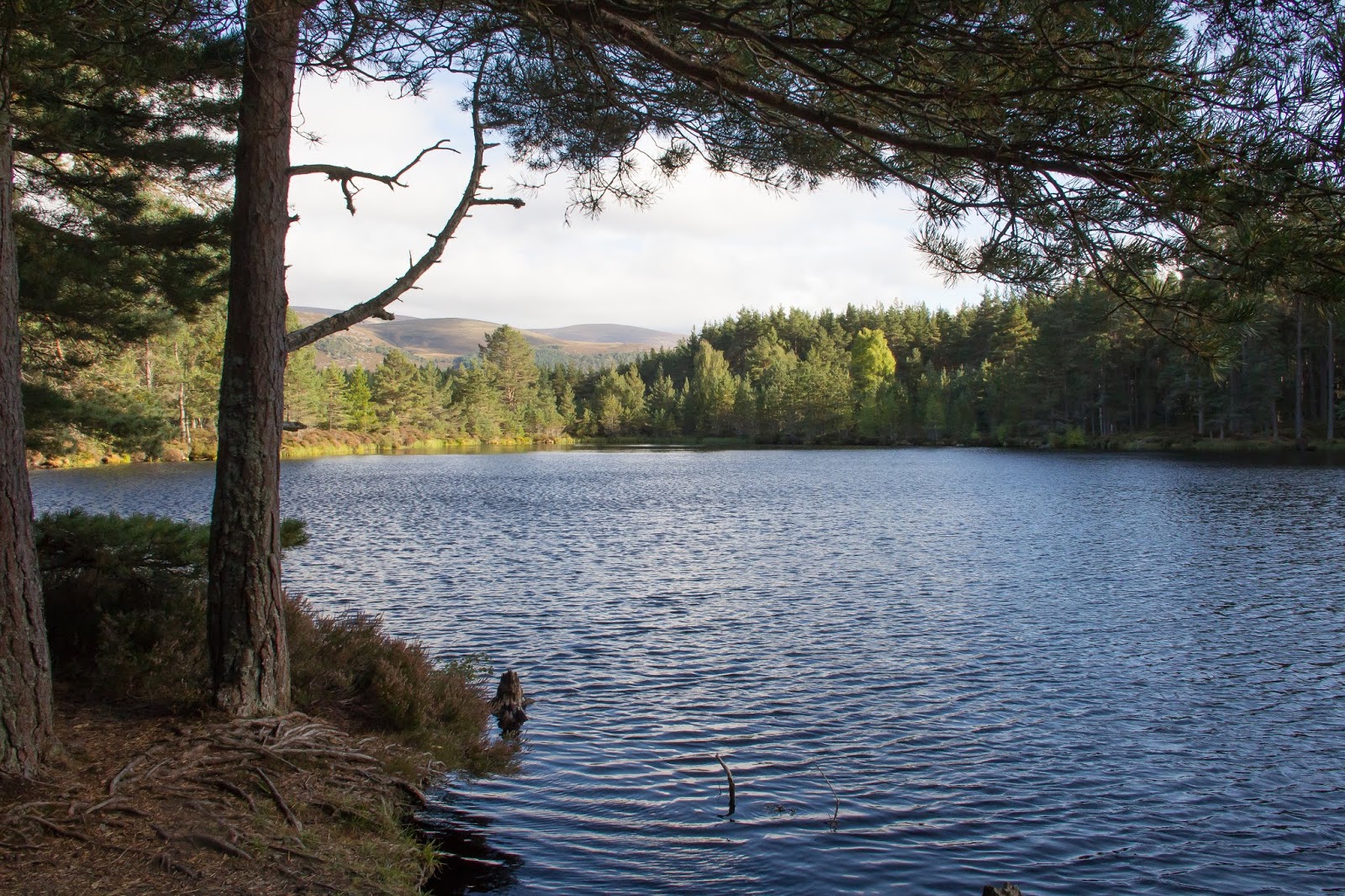
The Uath Lochans turned out to be everything she described; charming, alluring, gentle, peaceful, lonely, isolated and yet easily accessible. Unlike other places like this in The Cairngorms, it's possible to drive right up to the first of the lochans.

Way-marked routes lead round to a charming craggy viewpoint in a lovely position over Glen Feshie.

Tuesday, September 18, 2018

Monday, September 17, 2018
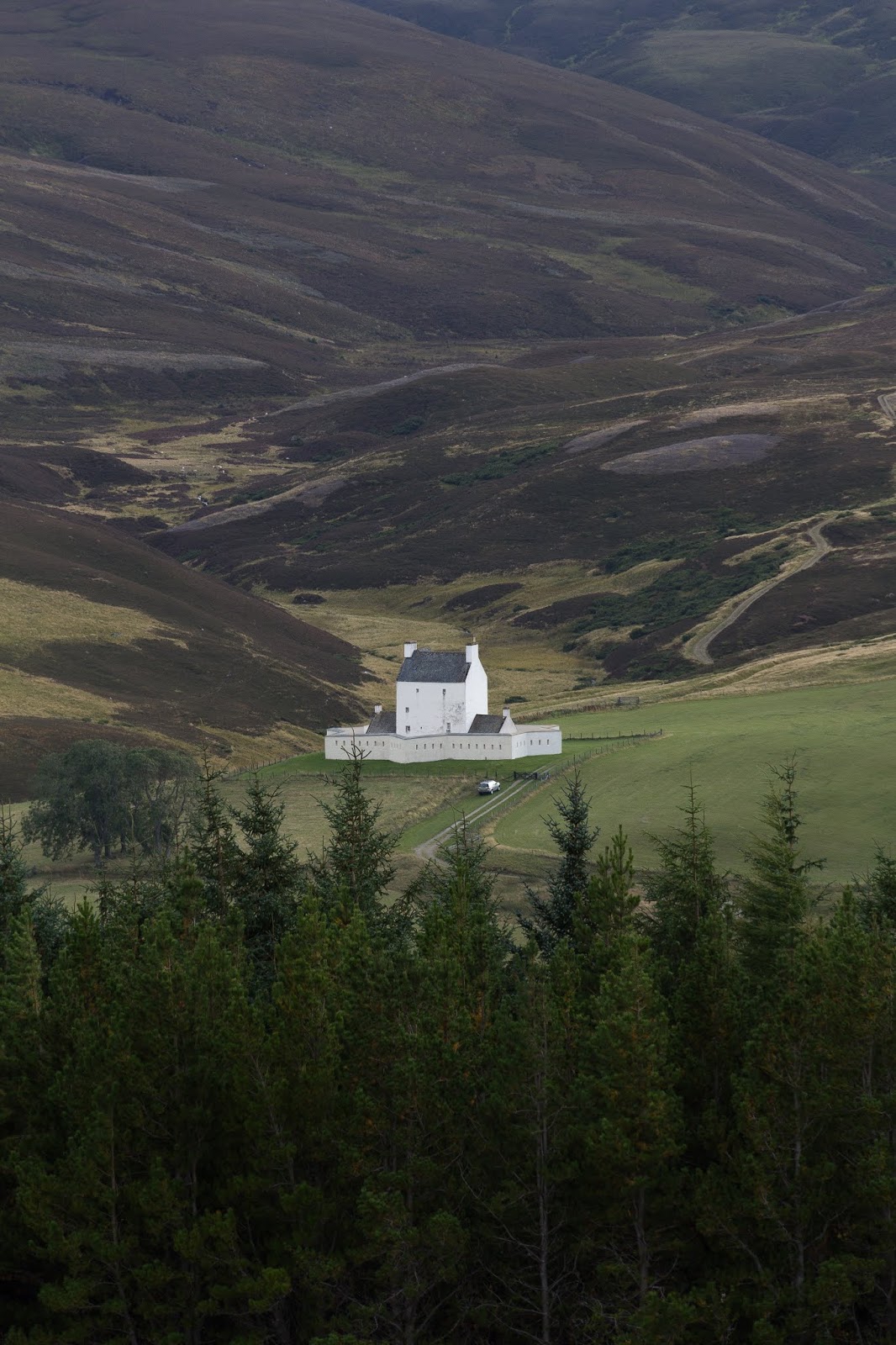
Book Notes: From Anger to Apathy - The British Experience Since 1975 by Mark Garnett

In this fast-paced, lively and hugely enjoyable book, Mark Garnett (a politics lecturer somewhere or other), takes the reader on a rollicking roller-coaster tour through British politics and culture covering almost five decades in a mere four hundred pages. In his tour de force, Garnet ranges easily between tiny details of stories, elections, characters and incidents on one hand - and generalisations about the country as a whole on the other.
Rather pleasingly, Garnett refuses to be drawn into the standard stereotypes that trap lazier historians; the most obvious is that (a) the 70s were a ghastly time to be alive, with strikes, three-day weeks, rampant inflation, and the Northern Irish troubles; and that (b) Thatcher then came and screwed up our previously wonderful nation. Such poor, but oft-invoked shoddy readings of history fail to satisfy the reader simply on the grounds of lack of internal consistency! Garnett is instead, suitably tough in his analysis of everyone.
His overarching argument (if there really is one), is that Britain has changed since the 70s, and while some of these changes have been good - many are to our detriment. While he paints a bleak enough picture of 70s Britain, he doesn't do it in a 2-dimensional way, but is rather more sympathetic to an age in which there were stronger community, class, union, family and social bonds holding people together.
The layout of the book is interesting too in that the material isn't arranged strictly chronologically, but in themes' with the themes being addressed in a logical order which does represent the times. The anger of the 70s, of the class-conflict and economic and social strife, and the racial riots which filled the headlines, boils over into the early 80s, and on to the miners strikes and poll-tax riots; but we find the anger levels lower at the start than the end of the period. In turn Garnett examines "Fear" (Cold War, Foot and Mouth, Millenium Bug, Aids); Charity Faith and Hope (Live Aid, and Secularisation), Greed (were the 80s really more greedy than other eras? - not really!), Lust (sex, morality and scandals) and finally Apathy - where he leaves us. Here he is really bleak in his outlook, alleging that we have become stultified consumers, radical post-modern consumers, staring bleakly at moronic 'reality' TV shows, detached from 'reality' itself. He's not that impressed with our democracy, New Labour or the Iraq War either.... but then again, who is, these days?
The book is not just stimulating and sometimes surprising in its various assessments of people movements and ideas; but hugely enjoyable to read too. There were many events detailed here, which I vaguely remember, from childhood - nicely summarised and explained here too. It would be hard to imagine anyone agreeing with everything Garnett has to say, he's simply to much of a maverick to interpret all the events he discusses through a singly party-line; but I defy anyone not to find this book absorbing, gripping and thought-provoking.


Sunday, September 16, 2018

Tuesday, September 11, 2018


Redeeming a naughty word?
Rugby League player and writer Dave Hadfield recounts a bizarre series of events during his team's trip to play 'Sevens' in Italy in he 1980s. The end result was that he was transferred between clubs during the interval and played each half for a different team - wearing shirts of both Oulton Rangers and and Hemel Stags in the course of the match. How his erstwhile team-mates treated him on the pitch after his radical switch of loyalties, he does not record! When Wayne Rooney first went back to Everton to play against his former team - but now earning Manchester United sized wages, it would be fair to describe the Goodison Park atmosphere, as at least er.. 'inhospitable'. I imagine that Hadfield will not have been treated to especially gentle tackling during the second half of the 'sevens' he played for his new team. Changes of loyalty, purpose and identity always stir the emotions.
This observation isn't just limited to the realm of sporting conflict either. People who change sides are routinely hailed as heroes by the new team-mates and their treachery denounced by those whom they have left behind. A politician in my region is still often reminded of her previous party-political affiliation prior to her current membership - with some bitterness. The truth is that like Dave Hadfield, she changed identity, purpose and direction of play, and this is a source of tension.
Essential to the Christian view of the spiritual life is just such a transition. The problem is that the word which was once routinely used to describe it, has fallen into disrepute. So poisonous has this word become that it is often suggested that we drop it from our descriptions of the Christian life altogether. I have some sympathy with the view that the word might be so toxic that its real meaning is obscured by its use, and that people will recoil from it without pausing to consider what it might actually mean. However I am also wary of the fact that sometimes, refusing to use a word that Jesus himself was happy to deploy, might be something akin to being slightly embarrassed of my new team-colours - and that perhaps if Jesus used it, so should I! Jesus of course, warned quite solemnly about people who are "ashamed of me and my words."(1)
The word, of course, is 'repent'! This dirty word in Christian discourse, is no longer considered to be the standard stuff of the spiritual life; but the domain of the swivel-eyed loons yelling at people in shopping centres; usually with Gandalf-length beards, and alarmist sandwich boards. The oft appended 'for the end of the world is nigh' only goes to enhance the sense of disconnection from reality with which the word has become synonymous. The comic-actress Tamsin Greig performed a hilarious little impromptu routine on the Graham Norton show, in which she talked about her atheist neighbour who dog-sits for her when she goes on holiday. The story goes that she gives her new dog a mad-name which her neighbour will be required to yell in the park in order to call it back to heel. The name of the new dog? Of course, it was "Repent!"
Is it possible to rehabilitate this most awkward and embarrassing of words, and deploy it for good, or is it irredeemably lost to us as a useful and helpful description of the transformation we experienced when we became Christians; let alone a credible way of commending this change to those who are outside it? While the cultural and linguistic tide may have turned, in this article I am going to suggest, (perhaps Canute-like), that the word still has much to commend it, and that we are poorer without it.
One of the issues around the word is that it is routinely misunderstood. Monty Python fans will remember the chanting monks who march through The Holy Grail movie, beating themselves over the head with wooden planks. Indeed, during the Great Plagues in England in the Middle Ages, there were flaggellists who did just that. Believing that The Black Death was an outpouring of the wrath of God, they sought to punish themselves, in order to deflect this wrath from the populace. While this might have been well-intentioned, it betrays a complete misunderstanding of what Jesus and the other biblical speakers and writers meant when they called people to "repent". It also (rather wryly) caricatures what many people believe the word to mean today.
If repentance is to be rescued from swivel-eyed loons and flagellists, it is important to try and define what we mean by it. Perhaps the best way to do that is not through complex semantics, but with reference to Rugby League player Dave Hadfield with who we began. When Dave joined his new team, there were certain things which changed. Firstly his rugby shirt was swapped - he publicly identified with his new team, and left something of his old one behind. There's something 'repentance' like about that, but it isn't quite the heart of the matter. Implicit with his free-transfer to his new club, was the understanding that he would completely change his direction of play. That, perhaps, begins to tease open the definition of repentance for us. There is nothing self-flaggellating about the transfer. After all, the Bible is insistent that entry to the Christian-faith is entirely founded upon the grace of God and doesn't require either self-denigrating acts of flagellation, any more than it does self-enhancing acts of charity. In fact, the picture is that passion of Christ, has completed any necessary flaggellation for the whole of humanity; and that as a result, our entry into the Christian life is a free-transfer.
Nevertheless, this free-transfer has immediate and life-changing implications, which we should be fully aware of before we commit to it. That is, nothing less than a complete change in our goals, aims and direction of play. This essentially involves heart-felt changes in patterns of behaviour; using the objective criteria of The Bible, as the standard by which some things which once mattered, matter less. Other things, which were once a regular feature of life are removed - and other things which were never even considered are taken up. In the West today, these typically involve a change to the way we relate to the big-beasts of the human-psyche, (money, sex and power); how we regard stuff, ourselves and others. Clearly this is a long process of refinement we commit to, not an instant or magic re-wiring of the personality. Christians make no claim to being 'good-people', let alone approaching perfection, rather in contrast we would claim to be people who need the forgiveness of God for our faults. Indeed, many of us carry profound and deep regrets for sins committed in the past, and attitudes or desires with which we still wrestle. If our extended sporting-metaphor can be deployed again (without breaking!), we still make errors on the pitch, we sometimes score dreadful own-goals, and give away penalties to the opposition. However, pursuing those things is no longer part of our identity, our purpose, or intention; we are deeply committed to a new direction of play.
If the flaggelists have distorted repentance; we have equally been mislead by the assumption that repentance is essentially a great show of emotion. I suspect that as repentance is primarily a hidden thing, that undue attention is given to any outward signs that is has taken place - such as emotion. Now, repentance can be a very emotional thing indeed. It certainly was for me. C. John Miller's little book on the subject is out of date in only one aspect, namely it's title: "Repentance and Twentieth Century Man". If we were to overcome the obstacle of the title, or re-brand it 'Repentance in the 2stCentury", there is much in it of great benefit. In it, he takes exception to authors like Lewis Sperry Chafer who reduce repentance to a purely intellectual move; when for many of us it was more of a life-defining change of trajectory, undertaken with great feeling. I was an older teenager, wrestling with sin, doubt, and questions of purpose. What stung me into repentance was the strange realisation that despite my rule-keeping adherence, and desire to please, at a heart level I was not at peace with God. My 'religious activities' had neither compensated for my sins, nor changed my sinful desires, nor produced peace in this life, or the promise of hope for the next. Rather my outward 'christianity' was more like a facade than a matter of life-deep substance. Tears there were, but they were hardly the point. For high-profile academic Rosaria Butterfield, repentance was so profound, that she describes it in her memoir as being akin to a "train-wreck".
Properly understood then, repentance is both required and life-giving.
It is required, because Jesus demands it, in fact the very first words the New Testament records Jesus as preaching are 'Repent for the Kingdom of God is near"(2). Attempts to remove the notion of repentance from Christianity have been common throughout history; and continue to plague the church today. Some have wrongly thought that repentance is an affront to the idea that God saves us by his grace, not our efforts. They have suggested that saying that repentance is necessary is to put a form of human work in the place where only God's grace must be. This is fraught with problems, because the Bible makes it abundantly clear that while we are saved entirely by God's grace, if applied to us, that salvation changes us completely. The problem is tragically illustrated in one of America's most prominent Christian families. One of their members produced a book which sought to diminish the idea of repentance, creating a false-dichotomy between it and God's grace. The fact that not long after publishing it, he was found to have been committing long-term adultery, is as startling as it is revealing. Now, while there can of course, be free forgiveness and grace for this man; but a heartfelt-returning to God and His ways, must be part of both the path home, and the evidence that change has really taken place. Likewise, placing the subjective standards of our own feelings of what might be acceptable to God, with what the Bible reveals as His standards is a damaging dilution of Jesus' message. The trendy word for this is 'wiring'. The Bible, it is claimed, cannot contradict my 'wiring'. The problem with this is that it reduces everything to the subjective; and if my 'wiring' is itself damaged, then I am measuring everything with a faulty gauge. A deep-level recalibration of life in a godward direction; a complete change in the direction of play is essential.
Repentance is though, when grasped fully; life-giving. For me, the issue was that trying to manage my behaviour; without asking God to change my heart, and my soul, and giving me a new identity; was like the deliberately infuriating arcade game whack-a-mole. As anyone who has ever attempted to play the game will know; wherever you are ready to strike with the mallet, the mole will inevitable pop-up somewhere else! Adding a facade of religious behaviour over my sinfulness neither brought me peace, nor controlled my behaviour very well. In fact whenever I tried to control sin in one area, it infuriatingly popped-up somewhere else. Something deeper was required, something which allowed me to be honest about who I was, allowed me to have integrity, and brought me peace with God, and began the process of long-lasting change. Faith in Jesus Christ, was one side of the coin. The other was inviting him into my life, acknowledging his authority over it, and asking Him to begin changing me - from the inside out. This repentance meant heading back out onto the pitch, in new colours, and ready to begin to play for a different team. Repentance is then, the moment at which the love, grace, joy and transforming power of God flows into a person; and the business of making them more like Christ begins. As Chrislikeness is our aim, purpose and destiny, repentance is not some self-flaggelating ritual, nor an optional-extra; it is the departure-lounge for eternal life.
Don't expect your former team-mates to welcome your change of loyalty though. It can be rough out on the pitch.
________
(1) Luke 9:26
(2) Matthew 4:11
Sunday, August 19, 2018
Glen Feshie

It's many years since I have been down Glen Feshie, and I have few memories of it, other than thinking it was worth a re-visit. It wasn't just last week's Cairngorm epic, through the Lairig Ghru, which brought these glens back to my attention either. Scotland's weather conformed today to the traditional pattern, with the West taking the brunt of the rain, and the Eastern mountains hiding in their shadow. I have a friend who works in the hydro-electric industry, and when we talk about Scotland's Highlands, his vast knowledge of the West Coast stands in marked contrast to his relative unfamiliarity with the East. Rain is the resource he farms, and only goes where that is found in abundance. The opposite is the case when planning a short walk, especially with my wife and daughter in attendance.

My memories of Glen Feshie, (which must be fifteen years old, at least), are of a blazing hot summer's day; of the track by the river, and the two Munros, Mulach Clach a Bhlair (steep sided, broad summit, heathery), and Sgor Gaoith (magnificent views towards Braeriach towering over Loch Einich). These old memories are hazy at best, and so a re-visit was in order.

Unlike last week's route march, this afternoon's trek was a pleasant dander forFeshie proved to be an absolute delight however. The wide glen floor, once carved by ice; now has a wonderful river gliding down it, carving its way through the moraines. It is home to a dazzling array of wild flowers, and native natural woodland, which in turn is teeming with life. While the unnaturally tree-less glens are silent and empty; Feshie was alive with scurrying, buzzing, scuttling, with tiny birds on the ground, and birds of prey circling above. In a couple of places, it looked rather like a walk we did last year in the Canadian Rockies (smaller though!), and we recalled the bears we had seen there!

Not a Munro, not an epic trek; just a great short walk - and my appetite for the outdoors, fed for another week or so.

Monday, August 13, 2018
The Lairig Ghru
The Lairig Ghru is a name which reaches back into my young childhood. Around the same time as my Dad read Tolkein to me, he also told me about the hillwalking trip he took through the Cairngorms when he was fifteen; back in the mid 1950s. Somehow the two things seemed to merge into my young mind, which filed all these mental images under the headings 'mythical' and 'wonderful'. Braeriach, The Forest of Rothiemurchus, Corrour Bothy, Derry Lodge or The Pools of Dee sounded as evocative and far away as Rivendell, The Lonely Mountain, The Shire or The Running River. These are names to enjoy pronouncing, conjuring up images of hobbits on quests or 1950s schoolboys on life-shaping adventures. Rather wonderfully however, The Cairngorms turn out to be real, and accessible.


The Lairig Ghru is described by mountain writer Cameron McNeish as "one of Scotland's truly great walks", and one I have wanted to do for decades. A 'Lairig' is a pass through the mountains, and this one, the Lairig Ghru, allows the walker to cut through the heart of the great Cairngorm range, the old Monadh Ruadh; from Deeside, near Braemar to Speyside near Aviemore. This great heart of eastern Scotland is unpenetrated by roads; even the estate tracks and engineered paths of the beginning and end of the route peter out in the high pass, and boots meet mountains directly without human intercession. It is not entirely natural land (left to its own devices it would be far more forested); but it is undeniably wild land. The mountain rescue service is kept busy here, and sadly not all their expeditions reach happy conclusions; these are not hills in which to get lost, cold, or injured alone. Yesterday, we faced a forecast which was wet and cold, but at the end of an unusually hot summer there was no chance of meeting any lingering snow - which seems to have caused the most problems over the years, lying deep in the Lairig until remarkably late in the year.
The great defile of the Lairig Ghru is visible from Aviemore, a great gash in the bulky skyline above the woods. Sadly, Aviemore is now visible from the Laiig Ghru, a particularly ugly concrete hotel dominates, whose architect should win some sort of incongruity lifetime achievement award. The southern end of the Lairig Ghru isn't visible from any public road, because there aren't any there; the view up the pass from that end has to be earned by walking or cycling from Linn of Dee either via Derry Lodge and Glen Luibeg or via the White Bridge. I seem to have seen this great walk from all angles over the years, yet never been able to complete the walk, usually for logistical reasons - it's a two car effort, with a long drive in at the end of the day. I've seen it from Braeriach, from Monadh Mhor and walked down into it from the Chalamain Gap; but yesterday (at last!), I had the opportunity to do the complete Linn of Dee to Rothiemurchus route.
One of my neighbours, organised a group, and left a car at Rothiemurchus at the end of her family holiday in Aviemore. Four of us drove through Glen Shee, to Braemar and left my car at the big carpark at Linn of Dee (£3 a day, Pay and Display now!). From here the engineered Glen Luibeg path is well signposted, and snakes its way through the woods, meeting a bulldozed track all the way to Derry Lodge. Derry Lodge, all shuttered and forlorn, was once apparently a busy shooting lodge, full of Victorian and Edwardian hunting parties; busy with the sounds of dogs, the smells of feasts and whisky and adventure. Walking with friends old and new, we mused about what a melancholy sight it now is, and what a wonderful mountain bunkhouse it would make if someone had the time, money, inclination and could get permission.
The footbridge at Derry Lodge has a signpost pointing westwards to the Lairig Ghru at the far end of it. I remember getting caught in bogs at the next section a couple of times, but it was hard underfoot yesterday - despite the persistently falling rain. It needs to keep raining for a while yet, to replenish the deficit of a bone-dry summer. We had no need, in fact, to search for the 'hidden' bridge at Luibeg - the water was so low, we walked straight across at the ford.

(Looking into the Larig Ghru from a previous trip to Monadh Mhor)
It's here, beyond the Luibeg Burn, that the walk changes in character - and the excitement begins. As the path winds gently uphill underneath the Munro Carn a Mhaim, The Devil's Peal looms into view. Yesterday, it was magnificent, great slabs of wet, grey rock thrusting skywards into the clouds. Perhaps an appropriate metaphor for such a sight is Tolkeinesque. Either way, it is as the gentle and broad landscape of Glenn Lui is left behind that the Middle Earth of my childhood imagination is entered. Despite the rain, and the plummeting temperatures - it was really magnificent; I couldn't think of anywhere I'd rather have been.
The little bothy at Corrour is a well-known landmark; nestling in the Larig Ghru beneath the Devil's Point and the Angel's Peak. My Dad camped here all those years ago; I can only imagine what a tent made of heavy-duty canvas must have weighed! My kids have camped here on DofE expeditions too. I have previously passed this spot, in the way to and from the adjacent Munros. The usual loose association of good natured hill-folk were hiding in the bothy yesrerday lunchtime, travellers from Scotland, Wales and England - some staying the night, others just sheltering from the rain. We had a brew-up, a chat with the folks there, and layered up, before heading back out into the rain, and biting wind. The path is clear, and follows the east side of the glen floor, past a stone named as the Clach nan Taillear. A stone with a name, might indicate a memorial to some ancient tragedy - the hills and weather certainly looked foreboding as we climbed into the heart of the mountains. If we had felt large and confident, striding through the woods to Derry Lodge, we now looked like little hobbits beneath the huge peaks of Cairntoul and Ben Mandui looming either side.

The path runs into a boulder field by the Pools of Dee at the head of the Lairig. There are no problems here, other than a far slower rate of progress than is possible either side; and the path braids and re-joins repeatedly. Nevertheless it's a quick descent down to the trough where the Braeriach path drops in from the left and the Chalamain Gap path climbs out to the right. The time I walked through the Gap, on my own, very early one morning, the moon was huge - and eerily framed in the Gap itself.

The path descends rapidly into the wonderful Rothiemurchus forest. This living remnant of the Great Caledonian Forest is soft; teeming with life and aromatic. The midgies were in their element here too; and soon our party reeked with the ghastly odour of Skin-So-Soft; allegedly the best defence against the little pests. Smelling like a bunch of Grannies at a perfume convention, and surrounded by a cloud of swirling black dots we picked out way through the woods, to the landmark of the Cairngorm Club Footbridge and on towards the waiting car at the road by the campsite. The engineered paths here are well made and as a result bog-free. They are also rock-hard, and several miles of pounding them made my feet ache. My lovely old walking boots are in their last days of useful life, the uppers are wearing and the soles are desperately thin. They no longer grip much, or provide much cushioning from the relentless thumping, and will soon be put out of their misery. As a result, by the time we completed our 20miles, (47,000 steps according to a Fitbit wearer), I was glad to see the car and lift my feet from the boots.

The day was completed with dropping one walker to the station at Aviemore, while the rest of us drove via Tomintoul and the Lecht, to collect my car at Linn of Dee for the return drive to Perth. Sadly, the chippy in Braemar was closing so there was no fish, or pies, or haggis to be had; happily the owner was glad to hand us three portions of chips, completely free. It was past closing time, and they would be thrown out otherwise!
The Lairig Ghru is a classic Scottish Walk. I'm glad to have finally followed in my Dad's footsteps (and er.... those of Bilbo obviously); and walked all the way through. I love these mountains, and get there so rarely. The day was made complete by safe travels and great company.
Subscribe to:
Posts (Atom)