Showing posts with label Education. Show all posts

Thursday, December 13, 2018

Film Notes: For The Love of God

I have to confess to being a bit of a history nerd. Having spent several years studying it, accumulated countless books and an insatiable reading habit, I find the past utterly absorbing. It's common to hear politics, ethics, education, nationalism or multiculturalism being described as 'a battleground of ideas', but every historian is equally aware that our view of the past is every bit as contentious. We are all aware of "Black History Month", which has grown steadily in significance, as the once accepted racism which erased Black people from our historical consciousness has been increasingly rejected. Historians once looked for great themes and great men (yes, it was usually just men!); many these days look for "usable pasts"; which are often little more than selective trawls for evidence with which to weaponise history for contemporary polemics.

Religious history, has of course been subject to both these trends. Biographies of saints and martyrs have been produced to stir the devotions of the faithful; while the memory of atrocities committed in the name of "belief a", are kept alive by the adherents of "belief b".

What we make of the history of the church, is then something of great importance, and not just for history geeks like me. How the history of Christianity is handled is a significant marker in the current battle of ideas. Of course some Christians want to paint a picture of unbridled progress and blessing; while some atheists, such as the late Christopher Hitchens, wish to portray every aspect of the church's record as being fundamentally malign.
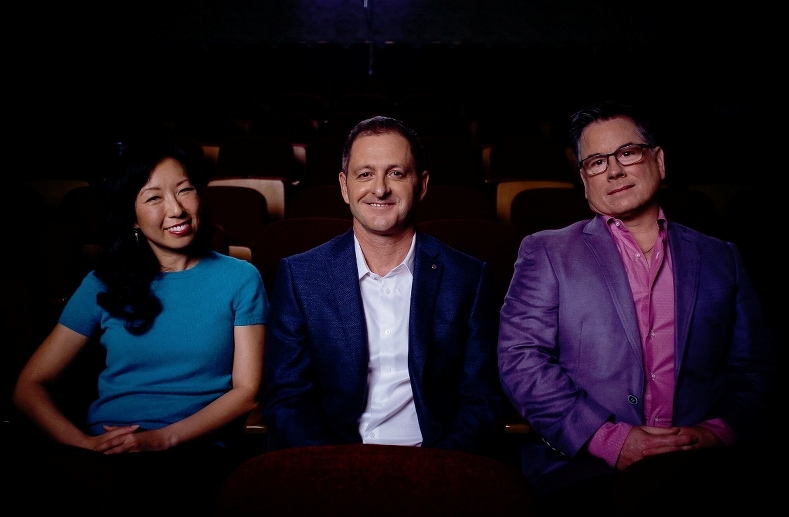
presenters

Perhaps only the foolish, unwary or brave would step into this vast field of two millenia of contention! Certainly the aim of presenting a fair and balanced picture of the church's moral and ethical record, which is neither a Hitchensesque hatchet-job or a series of 'lives of the saints' hagiographies is a bold one. However, this is exactly what CPX (The Centre for Public Christianity in Australia) have done in a 90 minute film entitled "For The Love of God: How The Church is Both Better And Worse Than You Ever Imagined". Fearing the worst, I watched this film with some trepidation, but they have really pulled it off, it is a great piece of work.

Bonhoeffer 
Filmed with high quality production values, CPX presenters John Dickson, Justine Toh and Simon Smart, are filmed in locations around the world, where Christians have made an impact for good or ill; and assessed the history. They tell stories such as massacres in the Crusades perpetrated on innocent Muslims in the name of Christianity, to Martin Luther King Jr's noble quest for Civil Rights; from Christian failures to oppose Nazism, to roots of Western charity and philanthropy in the early church as it was persecuted by Roman Emperors. The story telling is enhanced by dramatic readings of historical texts, and segments of academics discussing and assessing the meaning of the stories.

Wonderfully put together, well-researched, and presented in a lively style, the film itself is compelling viewing. The analysis is fascinating too; as they seek to assess where the church has gone wrong and where it has made a contribution. John Lennox, the noted Christian professor of Mathematics at Oxford describes the 'shame' of some of the things done in Northern Ireland in the name of Christianity. On the other hand Rowan Williams explores the way in which many disputes driven by other factors such as land, power, or resources have gained a religious veneer or justification; but were not inherently caused by clashes of belief.

The treatment of Colonialism is quite remarkable. Coming from Australia the film begins with the damage done to Aboriginal people by the white settlers, who brought everything from land-seizures to new diseases to Australia; sometimes justified in the name of Christianity. Yet, they also show that it was Christians who almost uniquely rejected a racist hierarchy of races, because they couldn't accept social-Darwinism, as their faith told them that all people were made in the image of God. Likewise the role of William Carey in India is examined, and not just in term of his exemplary work in education, and development. His long campaign against 'Sati' (widow-burning) can be seen as either imposing western values on India; or as a bold step towards the equality of the sexes, and thoroughly in line with the idea that basic human rights are universal, not allocated by the powerful; or awarded in response to capacity or contribution. This, likewise is an idea which only became embedded in western culture when Christian ethics replaced Greco-Roman morality in which things such an infanticide were almost de rigueur.

Robert Woodberry's thesis that Protestant missionaries have left a massively positive contribution towards social and economic flourishing in virtually every context in which they operated, is also given a well-deserved hearing.

Equally fascinating was the (perhaps not immediately obvious) subject of character. The weight of evidence that the ancients, despite all their philosophical sophistication, saw humility as despicable; was very well explained. The Christian view of the cross of Christ. the humiliated God, was radically counter cultural; and leads directly to so many of the values which we in the west assume are universal, but actually are rooted in Christianity.

ulster

Finally the filmakers ask us to examine the record of the church, as it stands up against the teachings of Jesus Christ himself. The obvious point that Jesus' ethical teaching commands great respect isn't laboured, but rather what is observed is that where the church has stuck to his words and example, it has been beautiful; but where it has veered off into contemporary cultures, it has looked ugly. Central to this discussion is Jesus' charge to his people to "love their enemies". This main thesis is explored through a charming musical metaphor, which I won't explain, but will leave you to enjoy on the film.

The film can be viewed as a single 90 minute "Cinema Cut" or in several shorter episodes; 1) War and Peace, 2) Rights and Wrongs, 3) Rich and Poor, 4) Power and Humility. It can be rented or purchased online, for streaming or by buying the DVD from https://www.publicchristianity.org/fortheloveofgod/ from where free clips, and study guides for groups or schools can also be downloaded.

toh

This honest film leaves little room either for Christian triumphalism on one hand, or mud-slinging anti-Christian polemics on the other. In that sense, CPX have done a remarkable job in opening up a sensible discussion in which the very real contributions of Christian ethics, and Jesus' teaching can be  seen alongside many of the sins of the church. As such the film will perhaps contain surprises for people on both sides of that debate. There is some uneasy viewing for Christians, especially on the Crusades and the Nazis; while some secularists will be alarmed at the extent to which so many of the values we celebrate in the western liberal tradition have distinctly Christian roots, and were pioneered in history by Christians. Furthermore, many of them are grounded in Christian beliefs, and sustained by them, and indeed inseparable from them.

Israel

CPX are to be congratulated on the way in which they have stepped so nimbly across this historical minefield, and produced such a stimulating, thought-provoking film, which is both visually stunning and academically rigorous.

Sunday, July 22, 2018

"Inventing the Universe" - A Conversation with Prof Alister A. McGrath


A while ago, I had the pleasure of speaking to Dr Alister A. McGrath, who is Prof. of Science and Religion at Oxford University, about his new book. While some of this was published in Solas Magazine, this is the whole interview,  reproduced here with permission, following the demise of that publication.
___

Tell us about your new book, “Inventing the Universe”. What is it about? Why did you write it, and who is it pitched at?

AEM:  I wrote it because I wanted to explain to people the kind of journey I made from being an atheist, who thought that science explained everything – and that was it; to a Christian, who sees science as very important as filling in parts of a picture, but that there is a bigger picture as well. So I am writing this for anyone who is interested in the whole area of science and faith, I think particularly for scientist who are Christians who want to articulate the way they think more clearly, or for other people who just want to know that there are other ways of holding science and faith together – which is why I use the language of “enrichment”, which is effect allow us to see a bigger picture of reality in which both science and faith have very important roles to play.

Something of an intellectual autobiography as well, then?

AEM: Well, it is actually, yes! So its really me saying that over a 40 year period, this is what I have come to think – does this help you!? It’s not saying, “this is right”, it’s saying, “this is what I have found my way towards, and if it helps you, I’ll be delighted!”

I notice that in the book you often refer to the “warfare model”, of Science versus Christianity. Why do you think that has come to dominate – at least in the public discourse, so much, and seize people’s minds, and create such a problem for giving the Christian faith, or Christian apologetics, even a fair hearing?

AEM: I think it’s become a defining narrative or our culture. In part, because it’s been propagated by a media who tend to just repeat what everyone’s said in the past. But more importantly, I think, the New Atheism, has made this conflict narrative as normative, in other words “this is the way it is”. And I think that when you have very influential cultural figures supporting this, its quite difficult to break that stranglehold. And so, one of the things I say, is that we need to tell a different story and show that, a) it makes more sense of things and b), it’s much more exciting and attractive.

How do we help people to hear Christian apologetics when their plausibility structure has already told them that what we are saying is irrelevant?

AEM: Well what I think you need to do is to say, “look, here is a narrative which has been suppressed, here is a way of thinking that people are trying to drown out”. They find it threatening, they find it challenging, and we need to say that they may not like it, but they’ve got to hear it. You owe it to us to give us a hearing. I think that is something we need to say. C.S. Lewis; I don’t know if you know his sermon called “The Weight of Glory”?

Yes!

AEM: Well in it, he says, look, the dominant narrative in our culture is, ‘what you see is what you get’, and he says we have been ‘entranced’ by that, and we need to break that spell! And then he says something interesting, he says, the way of breaking a spell is by casting a better spell! What he means by that is portraying Christianity in an attractive, intelligible, and an imaginatively compelling way, so that people stop and say, ‘we’ve got to think about this’. And we haven’t done that very well.

And the media is encaptured by this vision? And prevents people like you being heard at the public level, I suppose?

AEM: It’s become the dominant media narrative. If you read Charles Taylor’s book, “The Secular Age”, he talks about how this sort of thing happens, and the difficulty is that once a narrative takes root, anyone who contradicts it is seen as being irrational. And Taylor says, that once that mindset develops it’s very, very hard to break it. So we’ve got to see ourselves as a counterculture, a fifth-column, (or something like that), but we are subversives who are challenging the dominant narrative – a) because it’s wrong but b), because it’s pressing a much more meaningful and exciting narrative.

And your book is going towards doing that..

AEM: Well, it’s a small step in that direction, I mean, scholarship disproved this ‘conflict narrative’ a generation ago, but it’s taken ages for it to filter through to the media who keep on repeating this old fashioned out-dated approach.

Is this a book you’ve been wanting to write for a long time? I notice that previously you’ve published books addressing particular New Atheists and their thought, or about CS Lewis as a Christian apologist; but this is drawing back and looking at the bigger picture? Is this something you’ve been working towards for a while?

AEM: It is! (we’re just getting into a cab, so there will be a gap for a minute or so). Yes, basically this is a book I have been meaning to write for ages, and it is cast as a personal journey because that is much more interesting format – and it does raise all the intellectual issues I’ve raised elsewhere, but it does it in a much better form and I introduce a lot of new material that I think people will find really interesting.

I was impressed because I’m not a scientist (my background is in history) but it did make a lot of scientific ideas accessible to a non-scientist reader like me which was one of the things that I found so exciting about it.

AEM: Well, it is written for a general audience, although I think scientists will particularly like it. In fact we’ve just been doing a programme here at Premier Radio in which I’ve been debating with a leading British physicist – who is also president of the British Humanist Association, and actually we had an incredibly civil and interesting conversation because basically my science is right, and that makes it much harder for atheists to write it off. But also because it gets a really good conversation underway.

Interesting you were speaking to a physicist, One of my friends who is a physicist asked me to ask you, “Is it harder to be a biologist who is a believer than a physicist”? Because he knows so many  people in physics and maths who are believers and so few in life sciences/biology..

AEM: And that’s my experience too. I think the answer is ‘yes’, and that’s partly because if you think of someone like Richard Dawkins, Biology has been ‘weaponised’, (if I can use that phrase), whereas Physics has not, if anything Physics is going in the other direction. Physics is very, very, supportive of a generally theistic world-view. Whereas Biology, precisely because, if interpreted in a certain way, seems to be anti-theistic, is being seized upon and in effect being made the weapon of choice by those who want to continue the conflict narrative and also offer an atheist apologetic.

Delving a little more into the book. The idea of ‘multiple maps’ seems to be a key idea in the book, to reconcile the supposed conflict between science and faith. Can you tell us what you mean by multiple maps, what did you have in mind here?

AEM: What I mean is, let me put it like this, assuming there is a big picture, science gives us one bit of that picture – religion gives us another bit. We want to see the full big picture, that means that we need to recognize that science is going to tell us some things, but not others and its really saying, ‘Look you can approach things from only one perspective and say that’s all there is to it’; but that’s simply unacceptable because if you are simply a scientist and you say that’s it. then you leave out massive things like the issue of meaning, the issue of value and so on. And so the idea of ‘multiple maps’ is to ensure that you have a full palate of colours to do justice to the richness of the world, our experience and so on,  and it seems to me that that is a helpful metaphor for people to get into their heads the idea that any approach that says there is only one map and that’s it – is simply going to miss out on a lot of interesting stuff.

Which also would not just be an assault on Atheist Scientists, but also on Christian Fundamentalists, I suppose?

AEM: Absolutely. I think that what they’re doing is in effect locking themselves into a very small area and saying ‘this is it’ and I’m not able to dialogue with anyone beyond that. The method I’m adopting in effect is a wonderful platform for apologetics because it is saying, ‘look, we can talk and a very good conversation is going to be had here’, and in effect Christianity has a marvellous contribution to make, and it cannot be ridiculed, it cannot be ignored, there is something very significant here which needs to be heard.

Was I right in thinking that ‘multiple maps’ are the big idea of the book? A centralising thought?

AEM: I think it is a big idea – I supplement it with other approaches to make sure that there are other approaches that I personally find helpful. But I know from talking to people that the ‘multiple maps’ idea is so accessible that people find it very, very useful and I think in apologetics it has got a lot to offer.

And thought if multiple maps were a big idea in the book, “Scientism” was the big target in the book, Can you tell me (our readers), what do you mean by ‘scientism’, and the overreach of science/

AEM: Sure. Scientism is a non-Scientific viewpoint which says that science answers all meaningful questions and that if science can’t answer questions then they are not meaningful. So – in effect science tells us what the meaning of life is, it tells us what is good and what is bad. And you do find people like Richard Dawkins or Sam Harris particularly – I don’t know if you’ve read his book on moral landscape, that’s very much the line that he’s taking. And my point is simple this, that this is an abuse of science! Science is science, you’ve got make sure that you respect it, not convert it into something else, and when science is done properly it has limits, and that is the best way of preserving its identity, its integrity, by forcing it to answer questions which its methods don’t allow it to do. So what I am saying is, I am protesting strongly against those scientists who exaggerate the explanatory capacity of science and I know the scientific community would do the same.

So why is there this persistent element among some quarters of science that wants to over-reach, into scientism. Is it purely a power-play or … what is driving that agenda?

AEM: It’s partly a power-play because some scientists feel threatened by cultural developments which they see as marginalising themselves. But the real answer goes back to that conflict narrative. It’s all about an understanding about intellectual history which sees a trajectory from the dark ages, to a modern, enlightenment period in which reason and science, are the drivers of progress and therefore science is the guarantor of rationality and progress, and anything else such as religion is seen as backward and unhelpful. And that is a world-view, not an empirical observation. That is in effect the imposition of a world-view and science is being ‘weaponised’ to consolidate that world-view.

 ‘Weaponised’ that word again! But are there any other key things from the book, that you’d like to mention, which I haven’t asked you about?

AEM: Well I think there are two things to emphasise. One is that I do not in any way criticise science. I think science is wonderful, I think it is great, but incomplete. We need a full picture, not just a partial picture. That’s very important.  And secondly, I do hope that the book will encourage Christians to talk about these things, to feel more confident about their faith, but also to begin to really open up some of the questions I raise in that book, in public.

And where is your research and writing going to take you next?

AEM: Well, the next big book, written for an identical audience, is going to be on ‘what are we?’, ‘what is human nature?’, and that is a big debate in today’s culture and its going to be looking a scientific insights, cultural insights, philosophical insights, and in effect saying, ‘look there is a big problem in the naïve enlightenment view of humanity, which still dominates Western-culture, and here’s a better way of looking at it.’ And it will be very sympathetic, very friendly towards traditional Christian ideas of ‘The Image of God” and sin and so on, so in effect it will be absolutely rigorous in terms of engaging with where we are, but at the same time it will offer a perspective which often isn’t heard. And that will enter into a debate… I don’t know if you have read John Gray’s book, “Straw Dogs”, things like that. It really is entering into a big discussion underway right now about what is human nature that’s essential to so many political, social, and religious debates.

So is that a book-length treatment of what you probed at in Ch6, of the present book

AEM: Yes – that expanding it to a complete book, and taking off into new directions as well. Same readership, same length book, but the big topic is what’s in ch6 [of Imagining the Universe], but that will be expanded massively.


____________________________________

Alister McGrath is the Andreas Idreos Professor of Science and Religion at Oxford University, and Fellow of Harris Manchester College, Oxford. After initial academic work in the natural sciences, Alister turned to the study of theology and intellectual history, while also engaging in broader cultural debates about the rationality and relevance of the Christian faith. He is the author of many academic and theological works, as well as the bestselling The Dawkins Delusion and his acclaimed C. S. Lewis - A Life.

Sunday, October 04, 2015

Sunday, December 22, 2013

Biblical Archaeology in the Pergamon Museum (2)


The Pergamon Museum contains much more than we had time to see. There were however a few items which stood out, in addition to the great Ishtar Gate mentioned in the previous post. These first two images are of the reconstructed Market Gate of Miletus, a Roman construction from around AD100. The Pergamon museum many decades ago took the controversial decision to use the archaeological finds as a basis for complete reconstruction of the buildings with signifiacnt additions of new material. So what the visitor sees here is something which is marketed as a 'live album' but which largely consists of studio overdubs... (or something). This gate adorned the great city of Miletus, but was not completed until approximately forty years after 'St' Paul's several visits to the city described in the New Testament book of The Acts of the Apostles.

The photos above and below are the remaining fragments of huge statues of Hadrian and Trajan respectively. Roman political-theology welded together the adoration and ritual honouring of their gods with the veneration of Emperors who were given a semi-divine status. Participation in worship of these statues of the Emperors therefore become as much a matter of loyalty to the Roman State as it was something done borne out of theological conviction or spirituality. The museum provides headsets with brilliant commentary on all the exhibits, available in many languages, it was this commentary that said something interesting about this statue of Trajan. It said that while participation in the state religious rituals was near universal, the one group who refused to take part was the early Christian community for whom idol worship was fundamentally incompatible with their beliefs. It was their refusal to worship this piece of stone, which led to the persecution of the Christian church by the Roman Empire throughout the Middle East.


Empires come and go, but history lives on. This week both Labour, Shadow Foreign Secretary, MP Douglas Alexander and Prince Charles have brought attention to the plight of Christians in the Middle East today. The threat today looks substantially different to the enforced Emperor worship of Trajan's Roman empire; but yet is strikingly similar. Islamism is a religio-political movement which seeks to use religion as a political tool, and which makes outward observance of its religious code a matter of loyalty to its vision of the state. Like in Rome, what is perceived as 'heresy' is defined as 'treason' and therefore subject to the most severe persecution. Many good organisations campaign for religious freedom in the Middle East today, click here to find out more.


Moving from room to room through the Pergamon Museum involved leaping through the centuries in the imagination. In Biblical terms, turning a corner is like flipping over from the Acts of the Apostles to the early books of Old Testament History. These final three photos take us into the book of 2 Kings, 2 Chronicles and Isaiah. Prior to the hegemony of Babylon, Assyria was the major regional power in the Ancient Near East. After Israel was divided into two kingdoms by Solomon's sons, Assyria assaulted The Northern Kingdom and conquered it. Sennacherib's assault on Jerusalem during the reign of King Hezekiah is on of the great escape stories of the Old Testament. 2 Kings 18-19 describes the siege of Jerusalem, and Hezekiah's pleading with God for deliverance, in the temple. In response the angel of the Lord attacked the Assyrian troops at night, and Sennacherib return to Nineveh, where he was subsequently killed by his own sons pursuing his throne.


This water tank from archaeological digs of ancient Assyria, features inscriptions and depictions of the great King Sennacherib.


These battle-reliefs, feature images of the greatly feared and well-armed Assyrian troops.


Like Babylon, Assyria was a nation whose religious life was strongly orientated around idol worship. This Assyrian statue represented a weather-god, veneration of whom was supposed to secure the ideal conditions for the fruitful harvest upon which the whole society depended. The arms have long fallen off the statue but contained a spear in one hand and a lightning bolt in the other. The Old Testament presents such idols as these as a source of constant temptation for the Jewish people. While they very rarely actually abandoned the worship of YHWH as directed in the Law of Moses, the complaint of the prophets like Elijah, was that they combined it with the worship of idols like this one. The Baal's were thought to be fertility gods who could supply harvests and so forth, if suitably venerated and appeased. The temptation for the people was to 'hedge their bets' between God and the Baals, seeking to keep both on side. Old Testament theology revolves around the central idea that YHWH is the one true God, who will not share His people with rivals; but who called His people to trust Him for everything.

Tuesday, June 25, 2013

At the end of another "Marriage Course"

The DVD has finished, the guests have all gone, the candles blown out, the pens and spare manuals put away, the background music switched off, and most of the washing up and clearing away done. Another Marriage Course is complete.

Someone asked, "Can the Marriage Course change my marriage for the better?" The answer is that that is actually not a very good question! It's like asking, "Can a recipie book cook my dinner?" or "Can a Haynes Manual fix my car?" - the question contains such a major category error that it is virtually unanswerable.

The truth is that The Marriage Course is about equipping people with the skills needed to negotiate the changes and challenges of married life, in which marriage is seen as the life-long, joyous partnership of 'best-friends' doing life together. However, tools which remain in the tool box achieve nothing, and only fulfil their designed purpose if brought out and actually  used! Likewise, if a couple complete The Marriage Course but don't do things such prioritise time with each other, don't learn to listen effectively, don't forgive each other, or any of the other essentials taught on the course, them it will do them little good. Likewise, if despite what they have learnt they bear grudges, are rude to each other in public, allow wider-family to negatively impact the marriage, are sexually unresponsive to one another, or refuse to learn to express love in the ways most profound for their spouse; then mere attendance at the course will be of little help.

However, our experience over several years, first as participants and then of hosts of The Marriage Course has been that the course has not just equipped people with the tools required for healthy marriage-building, but also been instrumental in inspiring them to do it. In our marriage, for example, we long ago identified that our relationship was 'time-starved', but it was only when we did The Marriage Course that we actually practically addressed the issue properly and began to schedule 'marriage time' into our diaries. 

Part of the reason The Marriage Course inspires people to put these tools into action is that the DVDs are full of stories of real couples talking about the positive changes that have come into their lives as a result of applying what is being discussed. Many people seem to have given up hope that their relationships can be anything more than 'disappointing', and these stories re-awaken hope. 

Another reason is the fact that The Marriage Course mirrors the public-yet-private nature of marriage in the way that it is run. What I mean by that is that marriage is a public-relationship in that it is a relationship declared in front of family, friends and witnesses, recognised in law, and in church weddings with vows made consciously before God. Marriage is not a secret relationship. On the other hand the content of each marriage relationship is intensely private, as every marriage is different. We know that every couple on these courses comes with different life-pressures, different issues, and different perceptions. The Marriage Course, rather neatly reflects this public-yet-private nature of marriage. On one hand there is the 'all-together' element of all being in the same place at the same time to do the same thing: build better marriages, and we all watch the DVDs together. In this we get a sense that we are part of building a community around such shared values as commitment, loyalty, love, patience, forgiveness and a shared view of the value of marriage. Yet, because the discussion times are all 100% private and personal between spouses, the private and unique nature of those individual marriages is nurtured too. This is obviously and apparently important on week six when couples are asked to think through their sexual relationship, but is actually also really important when it comes to other issues such as learning to listen, and to forgive; where we have been made aware that couples have been processing very deep and serious issues in their lives.

Another reason that the course has helped to inspire people to put the tools taught into practice is because of the atmosphere that the course generates, which is of course stimulated by being part of a wider group of married couples all seeking the same end. Everything that is done is designed to try and create a 'safe-place' for searching and real conversations to take place. I remember someone telling us that in almost two decades of marriage the communication problems between him and his wife were caused by his inability to listen, and his propensity to shout, slam doors and leave the house if she said anything which he disliked. On The Marriage Course, in a house with couples talking quietly in every room this option was not available to him, and so he began to really listen to her. The more he listened the more he began to grasp her perspective and the more he understood, the less angered he was when they disagreed. This 'safe-place' for discussion was crucial for them, and is I believe, immeasurably enhanced by the fact that many people pray for the course.

All the courses we have done have been different. Different guests, different combinations of personalities, the old materials, the new DVD-set, different combinations of people from the church, and folks from outside, people of strong Christian convictions, loose connections to church, or no faith at all. This last course has been a really enjoyable one, with a really great atmosphere, and some particularly entertaining guests we've enjoyed getting to know, and chuckling through the DVDs with. I think we'll always remember this one as 'the back-pain course', as at one stage almost three-quarters of the male guests (and me!) were struggling in and out of chairs with back-ache.

The week-after a Marriage Course finishes is always a bit strange for me. There's one sense in which it is just lovely to have a week off. The amount of shopping, cleaning, clearing, tidying, cooking, washing-up and so forth is a huge (yet joyous) commitment. Next Monday, we won't have to have every room in the house clean, cosy and candle-lit, and it will certainly be more restful. However, I know that I will also really miss the sight of  these folks climbing the steps to our front door at half-past seven, of the banter over the dinner table, of food that takes more time and costs more money than our regular Monday night fare, of watching the DVDs and quietly praying for folks as they go off around the house to talk through the issues of life. Next Monday the house will be strangely quiet, and empty (and probably messy), and we'll probably at this point wish that The Marriage Course was 8 weeks long, not just 7.

Tuesday, March 19, 2013

A Good Death


A Good Death from PRN Films on Vimeo.

A Good Death is a film about end-of-life care by my friend Robin Taylor

Wednesday, October 24, 2012

Book Notes: Bad Pharma by Ben Goldacre

Ben Goldacre, who's newspaper column and book "Bad Science" has done so much to expose myth posing as science; has now turned his attention to the pharmaceutical industry. While his previous works have mentioned pharmaceuticals many times (he is after all, by trade, a medical doctor), "Bad Pharma" is his book-length expose of what he believes is wrong in this multi-billion dollar global industry. The results are quite shocking.

The basic thesis of the book is that the prescribing of drugs that takes place in clinics and hospitals is based on faulty evidence, and so is untrustworthy. The body of literature, of published peer-reviewed research, which are reviewed to produce drug liscencing and prescribing formularies has been (by a legion of distortions) systematically skewed by the trade in order to protect their profits and make their products appear to be more beneficial and less harmful than transparently fair trials could ever claim.

A major chunk of the book is given over to the problem of "missing data". That is the practice of simply hushing-up any trial result that does not produce a commercially beneficial result. The flip side of that is the selection of odd bits of trial data that look good (weird anomalies, or from unrepresentative sub-groups) and publishing just this data as if it were a whole trial. Goldacre explains and exposes this practice, with some poignant examples. He also demonstrates the ways in which this problem has been identified but not addressed by governments and regulators. Promises to open-up future research are, he argues, totally inadequate - as prescribing practice is based on the whole body of published research, accumulated over a few decades. He is demanding that drug companies, and regulators immediately release the results of all unpublished trials...

The rest of the book follows the steps a drug must go through in order to become licensed, marketed, and finally prescribed by doctors and then swallowed by us. These include research articles getting published in journals, regulators assessing the published evidence and issuing guidelines, and the process of marketing to doctors (and patients where countries permit this). What Goldacre alarmingly demonstrates is that the smallest distortions and biases at each stage of this process produce outcomes which are far-from the evidence-based prescribing to which all the Drs I know aspire and strive. So, journals funded by advertising from drug companies, or even owned by them, allow misrepresentations and publish selectively. New drugs which "work" gain headline status and influence prescribing, while serious head-to-head trials to demonstrate which is best are neglected. Regulators, say Goldacre, set the bar too low for approving medicines - in many cases only demanding that they beat placebo in trials, not demanding that they represent any advance on previous medicines. The scam of almost identical drugs being manufactured in order to basically renew copyright on older products is exposed; as is the manipulation of both doctors and patients through the billions spent on "marketing" products and "educating" doctors. Goldacre comprehensively explains these processes and how they should work, demonstrates the ways in which they have been distorted, and suggests ways in which these can be corrected. So, for example, he suggests that GP's do not allow drug-reps into their buildings as evidence shows that despite the rules and best intentions in practice they demonstrably influence prescribing.

Most disturbingly in all this, Goldacre shows that these distortions to process, openness and proper regulation have not simply kept doctors and patients in the dark; not even merely allowed us to be recipients of "less than best" medicines, not merely cost health services unnecessary millions; but in several documented cases have actually caused harm. One example involves a pain killer which had an unfortunate side effect (unusual numbers of people taking it died), the drug company knew this - but buried the research for years until the product was withdrawn.

At each of these stages, Goldacre shows that various governments, politicians and industry whistle-blowers have identified the problems he describes, and attempted to fix them. To cite one example; in theory all trials should be published now - whether or not the results suit the industry. However - he continues by showing that these 'fixes' have been illusory, the data-bases of trials being conducted are hopeless, and there is no effective policing of the industry to enforce compliance, he argues. At each stage, he shows that while the problems he highlights are recognised across the world; the fixes in place are failing.

One of the most extraordinary things has been the reaction to the book from the industry. A spokesman from  the Bristish Pharmaceutical Industry issued a rebuttal of the book which was demonstrated primarily that he hadn't actually read it. Goldacre in at least three instances anticipates the industry excuses, and answers them in detail; only for the industry just to trot them out as if they were convincing and final. So for instance, Goldacre details some of the huge fines levied on Glaxo-Smith-Kline in the USA for malpractice. He goes onto show that they are a British based company, whose drugs, practises and personnel involved in the American scandal are involved in, and affect their European operations; arguing that it is no-use for GSK to say in the UK that the American situation was nothing to do with them. So - when they pop and say, "nothing to do with us" they are using an excuse which has not only been anticipated but answered.

It is clear that if even half of what Ben Goldacre has so meticulously documented here is true - then there is a huge scandal as big or bigger than the banking crisis going on all around us every day. This isn't an ideological rant against big-business- this concerns the health and well-being of anyone who takes medicines and whether they can do so with confidence that the chemicals they are putting in their bodies really are the best treatment for them; or whether the choice of what  drug they are taking has actually shaped by selective or mis-information, advertising budgets, dubious education programmes for doctors, all undetected by poor and secretive regulation. Frankly, the pill I have to take every morning for a minor stomach-complaint: to what extent has my long term well-being been in tension with the share-price of its manufacturer, and to what extent has the flow of information from lab to journal to regulator to doctor been distorted by that tension?

Bad Pharma suffers in places from being over-long, and is a little repetitive in places. These flaws should not stop anyone from getting it, and being appalled. Goldacre suggests various responses that should be made, which are directed at researchers, drug companies, doctors, regulators and us patients too. Many of these are no more than robustly enforcing the kind of regulation which has long-been promised but never delivered.  The most urgent call for the public though is to start campaigning for an end to the scandal of missing data. That means, not to promise to details all future trials and publish all results; but to release all the hidden data from the buried trials which skew the systematic reviews of research on which prescribing formularies are based. It seems clear to me that the only way that the industry can prove that it has nothing to hide, is to hide nothing. 


Monday, April 02, 2012

International Justice Mission, Perth Seminar

IJM Perth Seminar

On March 31st, Terry Tennons from the International Justice Mission came to Perth Baptist Church to conduct a seminar on the problem of slavery in the world today, and the work that IJM does in the fight against it. The seminar was informative without being sensationalist; horrific in terms of the scale of the problems it outlined; but also encouraging and hopeful in its descriptions of prisoners released, and justice won.


Shameful Facts

IJM presented the audience with a barrage of facts about the prevalence and nature of contemporary slavery around the world today. Slavery - the trade in humans - is worth $39bn/year, making it the third largest illegal industry after weapons and drugs, and a rapidly expanding sector of the organised crime world. Coca-Cola is a leading world brand, but is not as financially significant as slavery. India alone is thought to have over 30million people toiling in forced labour, half of whom are children. Rwanda has 2m  child-slaves, being sold and used in the sex-industry. Slavery is not restricted to the sex-industry however, and slaves can be found working as soldiers, operating street crime networks, domestic servitude, cultivating drugs, working in factories, mills, quarries, brick kilns, or having their organs removed and sold for transplants. In Cambodia a child can be 'purchased' for as little as $100.


UK


Slavery, and its associated industry of people-trafficking, is present in the UK, especially associated with the 'payment-for-rape' of the sex-industry. A criminal in the UK might expect to pay £5,000 to import a sexual-slave to the UK, and make over £100,000 profit from the first year of her abuse. In 2007/8 at least 325 children were imported into the UK for slavery from West Africa, Vietnam, China, India and Thailand. In the British police sting operations named Pentameter 1 & 2, hundreds of slaves were released, and huge numbers of arrests were made. Many British people were shocked to discover that brothels staffed by slaves were operating in quiet, rural locations.


The International Justice Mission's Response


IJM is a Christian-charity, at the forefront of the fight against the evil of violent forced-labour around the world. There are four main elements to IJM's work. (1) Victim Relief, (2) Victim Aftercare, (3) Perpetrator Accountability and (4) Structural Transformation.

1. Victim relief: IJM is involved across Africa, India, SE Asia in working to physically release slaves from their captivity. They work with local police forces, helping them with all manner of information gathering and surveillance, to mounting raids on slaveholding facilities in order to see forced labourers liberated.

2. Victim Aftercare has become essential to IJM's work. They have developed a system they call "Trauma Focused Cognitive Behavioural Therapy" (TFCBT), as a way of helping freed-slaves to process their experience and recover from it. Many of the people they work with have been the victims of the most appalling physical or sexual abuse from an early age, and physical liberation is only the first step to recovery from slavery. In many cases the recovery work is led by former slaves, released through IJM's work. Liberated people are also assisted with gaining the skills they will need to build successful lives in freedom, such as literacy, numeracy and marketable skills.

3. Perpetrator Accountability is another essential element of IJM's work. When slaves are released, slave-holders and gangmasters need to be brought to justice in order to prevent them simply abusing a new set of vulnerable people. IJM's specialist legal teams are able to secure far higher conviction rates than many governments whose police and state prosecution services are either ill-trained, under-resources, over-stretched or all of the above.

4. "Structural Transformation" is the term which IJM use to describe their work in building the effective rule of law in countries whose legal and social care systems are malfunctioning. Working with Police, Prosecutors, Judges, and Social-workers, IJM is making progress in helping several government repair their  legal systems to make them effective for the first time in combating modern forms of slavery.

IJM are dedicated to constantly measuring every aspect of their work to establish the extent of the success of their programs. Independent research has suggested that in cities where their approach has been applied, slavery has been reduced by almost 80%! The Gates Foundation has funded some of their work liberating sex-slaves, as part of their strategy to fight the spread of HIV/AIDS, so successful is it at reducing the use of sex-slaves who are frequently infected.


More Information


These post consists of a few of my notes from the seminar, which I have put here as several people who couldn't make it, have asked for information about what they missed. Please find out more about the important work of IJM by clicking on the following links:

International Justice Mission (UK)
At The End of Slavery

Tuesday, March 27, 2012

Book Notes: Gunning for God, Why the New Atheists are Missing the Target by John C. Lennox

Gunning for God is John Lennox' reply to the critique of religion in general and Christianity in particular which has been so loudly and trenchantly offered by writers such as Richard Dawkins, Daniel Dennett and the late Christopher Hitchens. In chapter after chapter, analysing different aspects of their work, he finds their arguments flawed, their understanding of Christian belief skewed, and their use of evidence faulty. Lennox' most significant claim, however is that the New Atheists fail to live up to their own much-vaunted standards of objective enquiry, when it comes to matters of faith. Because they are led by a mistrust of religion which has spilled over into distaste and then blind-hatred, the New Atheist literature if filled with misquotations, misrepresentations and unsupported assertions, which Lennox exposes and dismantled with some relish.

For his part, John Lennox is a Professor of Mathematics at The University of Oxford, sometime lecturer in the Philosophy of Science, and someone who has publicly debated these issues with Dawkins and Hitchens. He also writes from distinctly Christian convictions - and wishes the reader to know why (contrary to the New Atheist assertions to the contrary) these form part of a seamless worldview with his science - and not in contrast or contradiction to it. This is where the book begins, but soon moves forward to consider things such as Hitchens' 'religion poisons everything' argument. Lennox ably demonstrates the historical silliness of this argument - and counters with the record of atheism, both in government and in the "wildly intemperate" statements about curtailing the freedom of belief and conscience that atheist writers such as a Sam Harris have made.

The latter half of the book focuses more on the Christian faith in particular, and deals in detail with some of the critiques of Christian theology which have been raised, such as the morality of the Bible and the doctrine of the Atonement (: Jesus died in our place to reconcile us to God). Here Lennox finds countless examples of (wilful?) misunderstanding of what Christians believe, and the construction and subsequent demolition of paper-tigers instead of careful argument, especially in the works of Dawkins, which he lambasts. Finally the book ends with a defence of the historically credibility of the central Christian claim that miracles occurred in Christ's life (engaging with Hume's argument), culminating in his resurrection from the dead.

This remarkably combative book pulls no punches, and demonstrates many of the flaws in the writings of Dawkins and co. concisely and aggressively. While no doubt Lennox would listen attentively if Dawkins were to be lecturing in his area of biological research, it soon becomes apparent that he takes a very dim view of Dawkins ability to comment meaningfully in the areas of philosophy or theology. 

Gunning for God, makes a strong contribution to this debate which has dominated so much public discourse about faith over the last decade. No doubt believers will be heartened by this book, and followers of Dawkins et al, very irritated by it. I hope that it gets widely read, and that people who have only read the New Atheist view of the world, will be prepared to engage with it, and that at the very least they will adjust their critique of faith, and tone down their invective in response.

Yet again, however we have a book from a Christian publisher without a proper index. While the endnotes are very full and detailed, a work of non-fiction should be properly indexed. If the publisher hopes that a work of apologetics like this is to be used in assisting in further discussion, then making the contents readily accessible through an index should be standard practice. 

۞۞۞۞

Tuesday, November 15, 2011

"The Parenting Children Course - Week Three": Discipline & Boundaries!

Last night we completed the third week of "The Parenting Children Course". While the previous weeks had focused largely on the happy and positive side of parenting (expressing love, setting aside adequate time etc) - this week we looked at the necessary but less enjoyable task of setting and keeping boundaries. One aspect that got us all thinking and talking was the concept of making sure that we are 'authoritative parents'. That is not to say 'authoritarian' - which is something quite different, as we saw in the following diagrams, based on the book 'Toxic Childhood'.

The first diagram (taken from the course manual) suggests that we can plot our parenting style on a graph of two axes, representing "warmth" (ie love, affection, closeness, fun, time and emotional connectedness) and the other "firmness" (ie the extent to which rules we set, imposed and re-enforced with punishments).

We then thought about the implications of different combinations of these attributes/failings. We first thought about a home in which there was no warmth, love, affection - but equally no setting of boundaries of acceptable behaviour. This they described as "Negligent Parenting". In this bottom-right quadrant, the parent is either too busy, or incapable of either meeting the child's emotional need for love, or its developmental need for understanding right and wrong. This is disastrous.

The top-right corner was then considered. In this quarter of the chart, parents are warm, generous, devoted and caring - but do not ever discipline their children. The children are either considered to be incapable of wrongdoing, or the parent is simply scared to say "no" when required. These children are spoilt - with serious implications for their future happiness and success in relationships.

At the bottom left, the "authoritarian parent" makes the opposite error to the indulgent parent. In this model, rules are set firmly and transgressions punished severely. There is little scope for independent judgement or beginning to take responsibility for making good choices by the child. The child is forced to behave in accordance with the parents code of behaviour, but there is no sense of closeness, love, affection or warmth. Fun is certainly not on the agenda.

The right balance is found in the top-left quadrant on the diagram, which is labelled "Authoritative Parenting". In this model, the parent seeks both to develop a warm relationship with the child in which skills such as the " love languages for children", discussed last week are used deliberately and intentionally to make children feel loved, accepted, and valued. However - along with that (and not in any sense in tension with it!) this love goes hand-in-hand with the kind of positive disciplining which makes children feel secure.

My wife and I were fascinated to realise the extent to which, while we strive for this balance, when tired, stressed, busy, or overwhelmed by three children, we can each slip into a dangerous imbalance. Our personalities mean that we would each naturally get pulled in a different direction, and become imbalanced in different ways!
We spent a long time thinking about and discussing the different methods of maintaining standards, imparting a sense of right and wrong, and re-enforcing the boundaries we have set. It was really interesting to speak to other parents about the different things they have used; systems of warnings, red/yellow cards, star-charts, withdrawal of privileges and working towards defined rewards - to inculcate the ability to make good choices. Obviously the need for consistent application of these is vital - and difficult; and requires long-term application for results to be seen.

Once again, this has given us loads to think about and some really important adjustments to make. On The Marriage Course, we discovered that sometimes our 'default settings' weren't helpful, and that taking a step back in order to think things through to make changes -is a hugely constructive exercise. It is proving to be the case with the Parenting Course too.

Tuesday, November 01, 2011

The Parenting Children Course (week 1)

Having previously gained a huge amount by doing Alpha's "Marriage Course", we we intrigued when the same folks published some parenting materials. We had a brief taster of the course at a conference at our church last month - and were impressed by what we saw, so impressed in fact that we bought the DVDs that day and resolved to try out the course. It's taken a few weeks longer than we had anticipated, but we have managed to assemble a small group of other parents - and we met for the first time last week and ran through week one of the five-session course.

The evening began with a DVD, on which authors/presenters Nicky and Sila Lee introduced the course, and prompted us to think about some of the key issues involved in parenting 0-11 year olds. Their presentation was a mixture of their own experiences and research into child development, but was regularly interspersed with filmed clips from various experts - as well as interviews with both parents and children.


On the first week we were challenged about several aspects of the way in which we do parenting. These included time priorities in terms of our interaction with each of the children; the benefits of 'family time' and positive routines, as well as the recommended limits on the amount of TV/PC/Wii (etc) time that are appropriate for different age-groups. Research about minimum sleep requirements at different stages was also mentioned. Along with this there was some good stuff about the priority of modelling good relationships, especially between parents; coupled with the need to keep a united front and consistent line in keeping boundaries for behaviour. The thing which really grabbed our attention though was the suggestion that we consider keeping the long view in mind at all times, in terms of the kind of person we hope our child will be when he/she is an adult, and how they will remember our home in 20 years time. This was welded to the very searching assertion that the most powerful factor in shaping our children's values, is not our words, but their long-term observation of our characters and behaviour!

The Parenting Course DVD's are much more directive in their tone than the Marriage Course DVDs (despite being written and presented by the same people). The Marriage DVDs are pitched more in the language of 'which solution here will work for your marriage' (etc), while on the Parenting stuff the tone is more, 'all the research shows that exceeding these limits for TV consumption is bad for your child', for example.

Like the Marriage Course, there is also the opportunity to discuss the issues raised in the DVDs, using questions found in the course manual. Unlike the Marriage Course in which discussion is strictly private and takes place only between spouses - there is some group discussion on the parenting course. This was great, as it was fascinating to listen to other parents who are facing similar challenges - as well as to contrast experiences too.

Next week we go on to think about 'meeting our children's needs', followed by some stuff of boundaries and discipline the following week. We're looking forward to it - but first we have some "homework" to do - implementing some of the lessons from week one!

Wednesday, October 05, 2011

"Relationship Education Works!" ALPHA's Nicky & Sila Lee tell Scottish Conference.

Nicky & Sila Lee

"Relationship Education Works", the Scottish Relationship Central Conference heard on Saturday. ALPHA's expanding portfolio of Family Life Ministries was given a boost as authors Nicky & Sila Lee, spoke to delegates from across Scotland about The Marriage Course & Marriage Preparation Course, which runs in venues around the country. They also gave an official Scottish launch to their new Parenting Children and Parenting Teenagers Courses - which they are encouraging churches to host as a service to their local communities.

The Lee's insistence on the power of relationship education, is based on their experience, and feedback from the thousands of people who have used their courses. The skills for developing and maintaining good relationships in marriage, and with children can be learnt, they said. Coupled to this conviction, they quoted a raft of statistics and quotes from church-leaders and politicians demonstrating the shortage of such skills in contemporary society.

Nicky and Sila Lee went on to affirm the importance of marriage as a vital component in the health of society; and challenged the churches to be more actively involved in supporting marriages. The churches, they said, are ideally placed in communities throughout the land to provide the support for marriages that can make a decisive contribution to social cohesion and human happiness.

Delegates broke into smaller groups during the day to look at the different marriage and parenting related courses, examining the content and discussing the practicalities of hosting and marketing them. They were also given the opportunity to hear from people who have run these courses in local churches and communities to ask questions and draw on their experience.

In his remarks, during the question and answer session at the end of the day, ALPHA Scotland Director Paul Davie drew on lessons from church history. He explained that the great evangelist John Wesley had encouraged William Wilberforce in his struggle against the slave-trade, calling it a "Glorious Enterprise", a "Holy Calling". He encouraged the delegates to press on with the task of benefiting society, in these terms. Many of the delegates responded to the closing invitation to commit themselves to doing just that, while others spoke of a renewed enthusiasm for the work.

Tuesday, September 30, 2008

Dr Ted Herbert


This morning I learnt from the ICC website that Dr Ted Herbert, passed away during the night. Our thoughts and prayers are with his family and the college community today.

I previously posted a recording of Ted talking about his serious illness, made during the last weeks of his life on this earth. It is now more poignant then ever, and can be heard here.

Saturday, April 19, 2008

Back to the Books

I've been hitting the books again this week, a major college essay to complete. Sometimes the book-list can feel like a mountain to climb. Still, it's an interesting subject - a historical study on how the church has understood its mission - especially in terms of the relationship between evangelism and social concern.

Tuesday, December 12, 2006

Exam Reprieve!

The shock news is that it now looks as if I may have passed my exam! The confusion is because I missed a term of study (spring 06) during which they introduced a new marking scheme, and what I thought was a % grade wasn't! In addition to this when the lecturer e-mailed my result to me he appended a :-( to the grade. Uuurrrggh! I can't get hold of the lecturer to check this out though.

Exam Disaster

I'm feeling very sorry for myself this morning after getting my exam result. It is by far the worst result I have ever had in higher education, (and compared to most people I have done a lot of higher ed.) I knew the exam had not gone well- but to find out that it had gone that spectacularly badly is pretty galling given the fact that I had done a lot of work and thought I was making some good progress. I don't know if I misunderstood some central element to the course or was completely illegible, either way I am sulking at home licking my wounds.

Wednesday, December 06, 2006

I am useless at exams!


Yes, I am reeling from an exam in which I didn't perform well! Although the paper was fair enough, and in line both with the content of the course and previous papers I wasn't well enough prepared (mostly due to "circumstances beyond my control"). I felt that although I knew a fair amount about the subject, and had done sufficient reading, I couldn't adequately organise my thoughts which seemed to come tumbling out onto the paper without much clarity. Hopefully my answers will be enough to avoid the dread of a resit, and my answers sufficiently legible too.

I haven't written a full-length exam for about nine years! I remember when I did my first degree, no kids, no house, no responsibilities and day after day available for concentrated study. Not anymore, with a wife and three children, grabbing odd minutes here and there to study are all I can manage - and what I am able to achieve suffers likewise.

On a more positive note I can add that the Christology module at ICC is excellent; really probing, insightful and challenging. Not only does it cover all the debates surrounding the formulations of the Nicean Creed and Chalcedonian definition, but engages critically with this tradition and its strengths and limitations as a useful and faithful contextual understanding of Jesus.